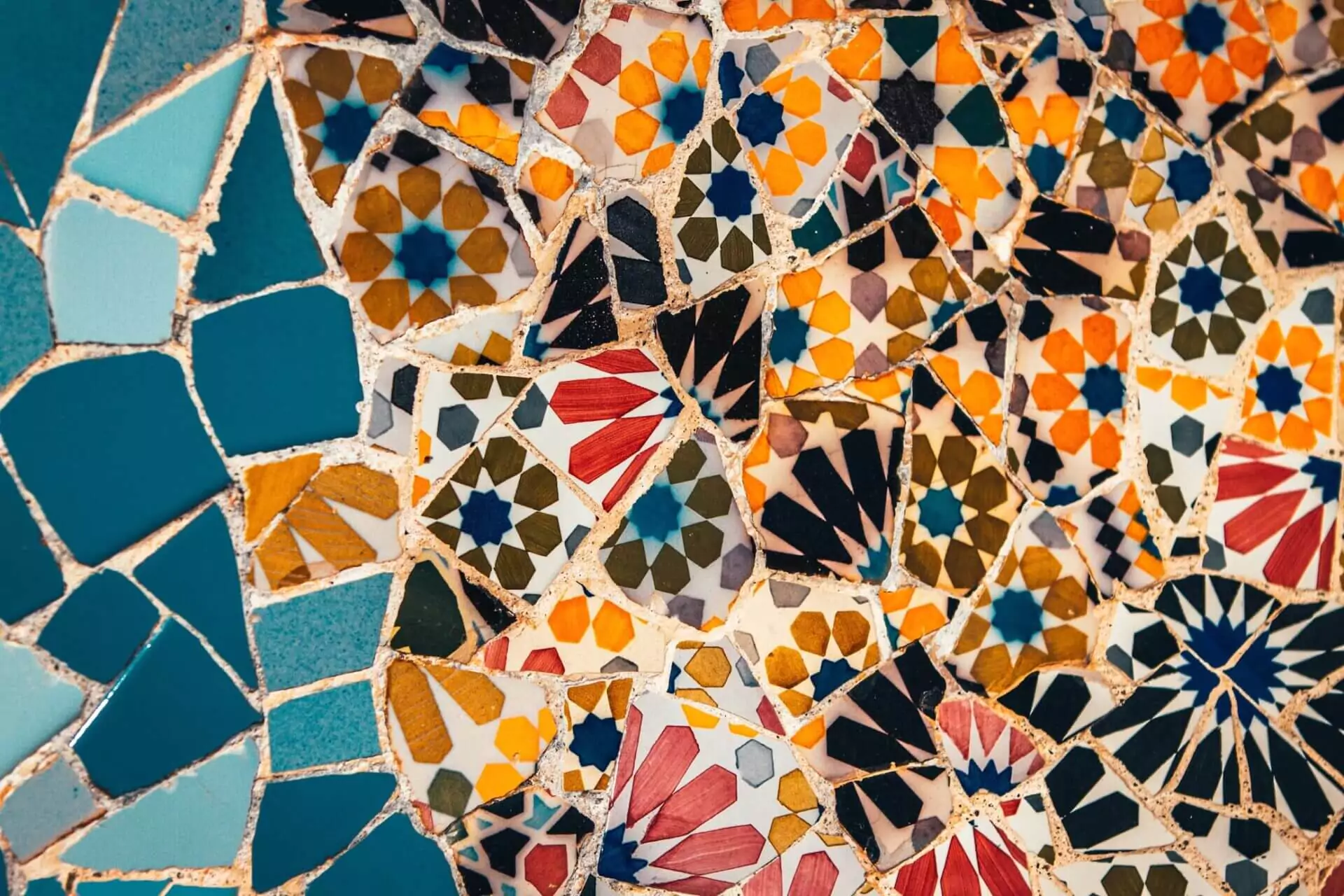
NEOM megaproject | Source: polskiprzemysl
Trencadís, a Catalan word meaning “broken,” carries a profound message within its artistry. It shows how shattered pieces, when lovingly brought together, can create something breathtakingly beautiful.
This mosaic technique is not just about art, it’s a reminder that even fragments can find new life and meaning when arranged with care and intention. Popularized by Antoni Gaudí, Trencadís symbolizes how fragmented elements, when skillfully arranged, can produce breathtaking aesthetics.
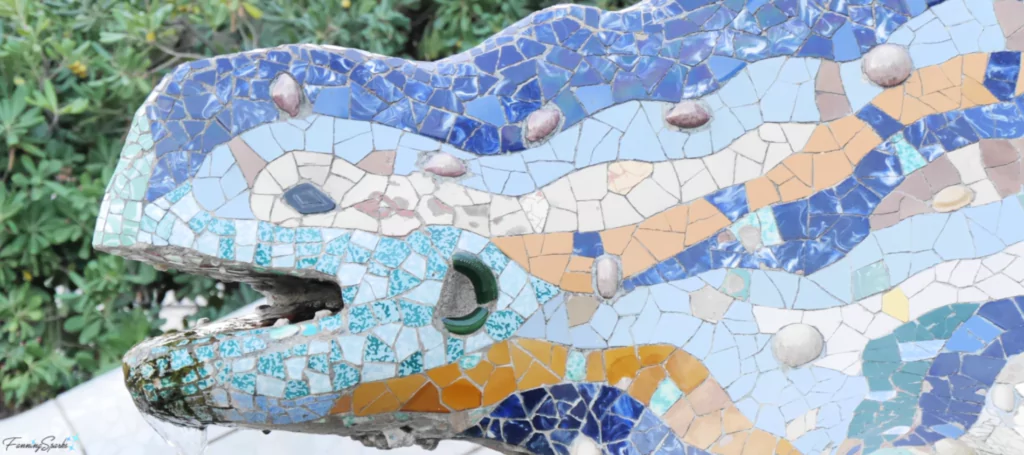
Park Güell: Dragon/ Salamander Fountain structure adorned with Gaudi’s Trencadis | Source: fanningsparks
All about Trencadis
Trencadís, an art form of fragments coming together into a finished product, originated in 19th-century Catalonia during the Industrial Revolution. As an innovative solution to the surplus of waste materials, it transformed discarded fragments into irregular shapes, vibrant colors, and fluid forms.
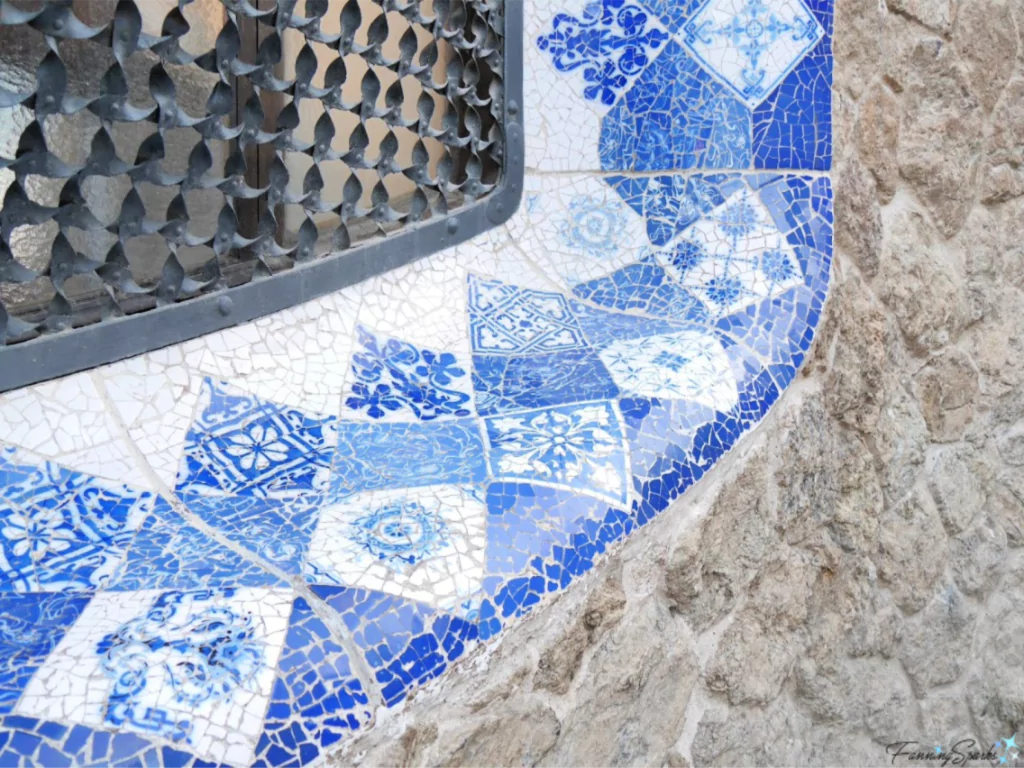
Park Güell Caretaker Window Trim | Source: fanningsparks
Antoni Gaudí adopted Trencadís as an experimental technique that reflected his unique architectural style. He aimed to integrate sustainability, free, and organic forms into his designs.
He elevated it from practicality to art, using it to mirror nature’s irregular beauty and harmonize architecture with its surroundings. His masterpieces, such as Park Güell, Casa Batlló, and the Sagrada Família, showcase its artistic and functional brilliance.
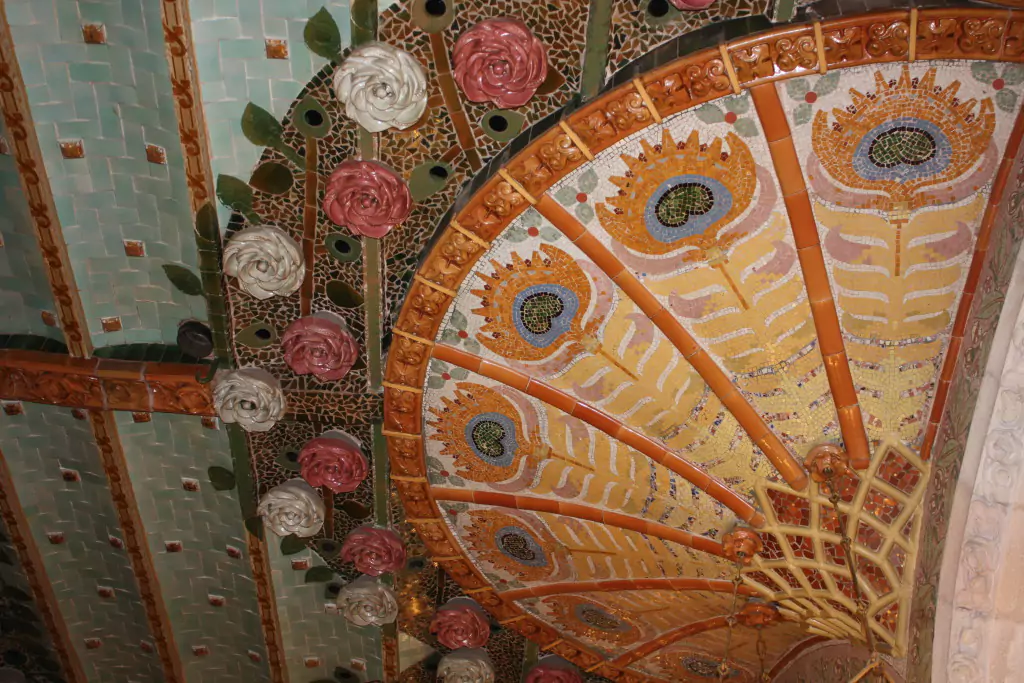
Palau de la Musica – masterpiece of Catalan Art Nouveau architecture | Source: barcelonaguidebureau
Over time, Trencadís became a symbol of Catalan identity, blending sustainability with creativity and inspiring modern discussions on upcycling and eco-friendly design.
Unique features of Trencadis
Material Variety
Uses irregular pieces of ceramic tiles, glass, pottery, and other upcycled materials, often with vibrant colors.
Spontaneity Over Precision
Focuses on spontaneous and adventurous arrangement rather than precise, geometric patterns as seen in the patchwork.
Mediterranean Influence
Shares its roots with other mosaic techniques from the Mediterranean Basin, reflecting regional architectural traditions.
Authenticity and Uniqueness
No two Trencadís pieces are identical, preserving the authenticity and individuality of each design.
Adaptability to Curved Surfaces
Specifically suited for covering curved or irregular surfaces due to smaller pieces coming together, unlike traditional mosaics that rely on flat tesserae or tiles.
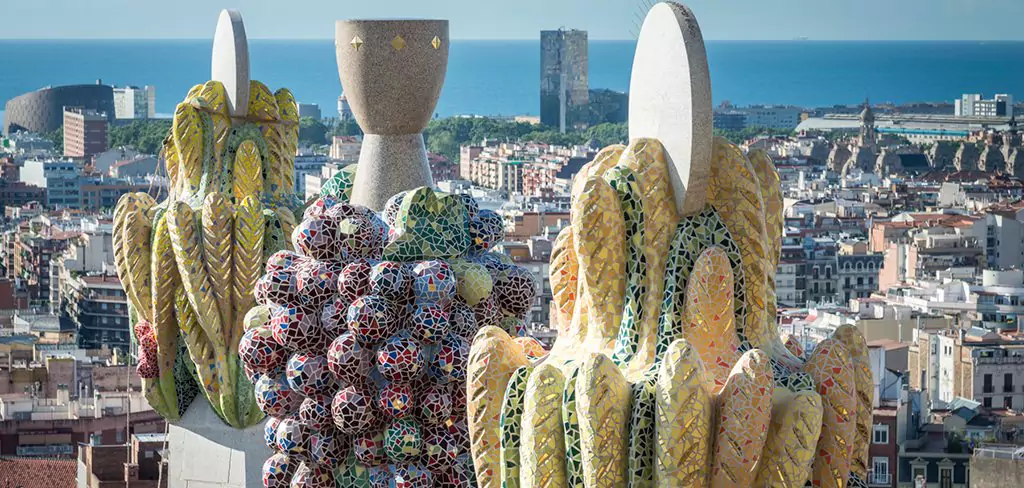
Casa Batlló, Barcelona | Source: sagradafamilia
Trencadís vs. Similar Techniques
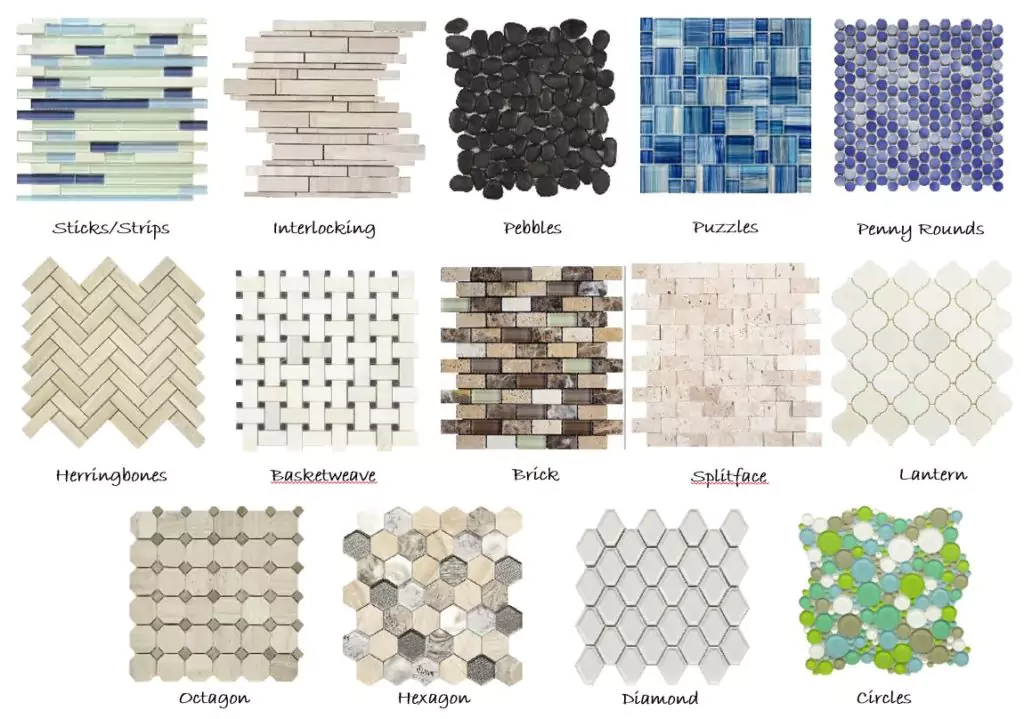
Different types of Mosaic Patterns | Source: Tileoutlets
Trencadís may visually resemble other mosaic techniques like terrazzo and zellige, but significant differences exist in their structure and technical execution.
Trencadis and Terrazzo
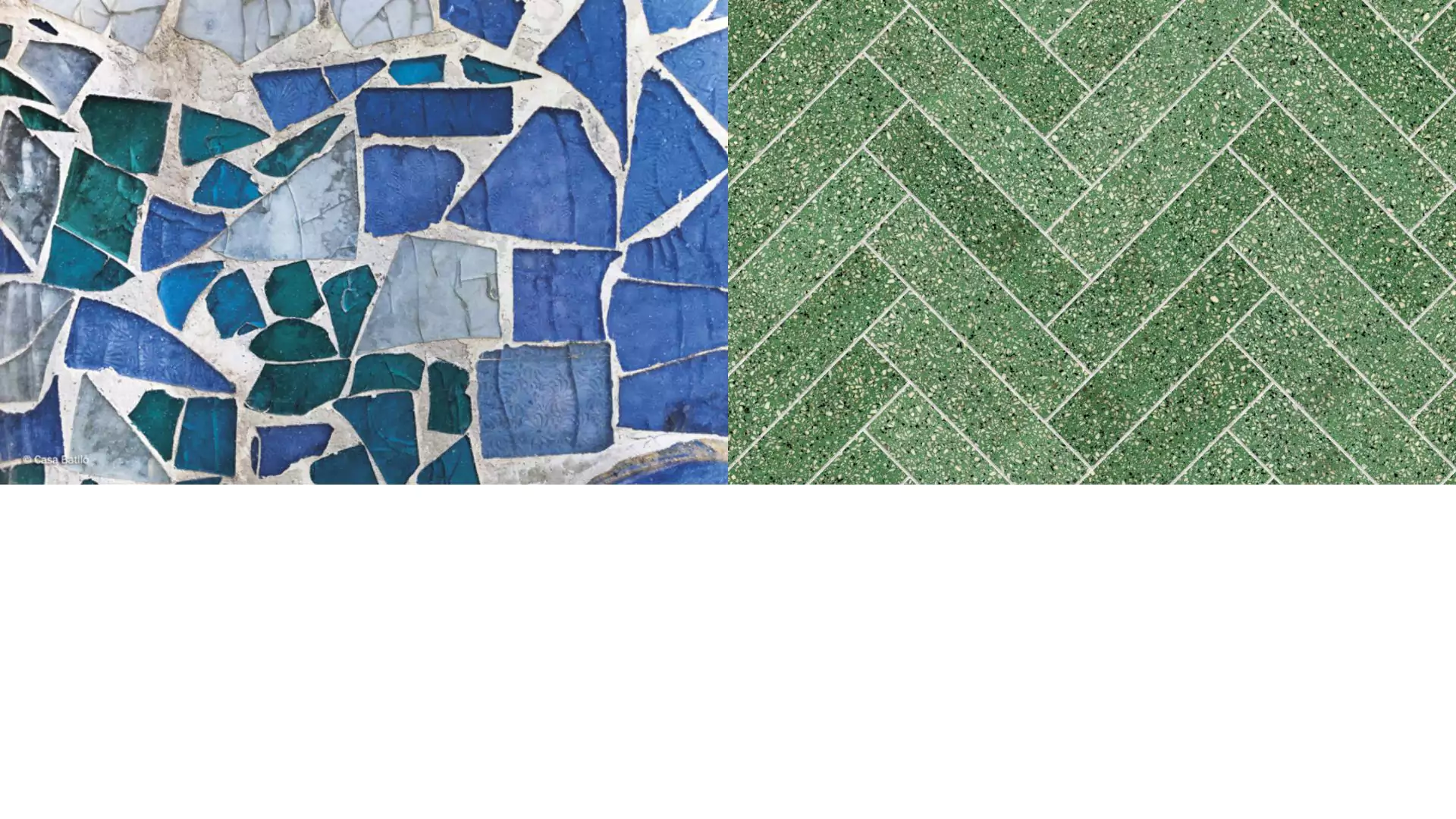
Gaudi’s Trencadis V/S Hemmingbone Terazzo Tile | Source: author
While both techniques share similar visual aesthetics and spontaneity, they differ significantly in their binding agents. Terrazzo uses cement as its base, whereas Trencadís relies on mortar. The functionality of these methods also diverges: Trencadís originated as a purely decorative innovation, whereas terrazzo began as a practical, cost-effective solution for paving floors and creating durable surfaces.
Trencadis and Zellige

Gaudi’s Trencadis V/S Zellige | Source: author
Both techniques explore vibrant colors and shapes, using fired and glazed earthen materials in their composition. However, Trencadís incorporates clay, while Zellige primarily uses mud in their mortar. The application processes are vastly different: Trencadís embraces irregularity and freehand designs, lacking a strict adherence to symmetry. In contrast, zellige is rooted in precision, with symmetrical, pre-cut pieces crafted with a specific purpose, often adhering to geometric patterns.
Notable Examples of Trencadis
La Pedrera (Barcelona)
The rooftop of this iconic building features chimneys and ventilation towers decorated with Trencadís mosaics.
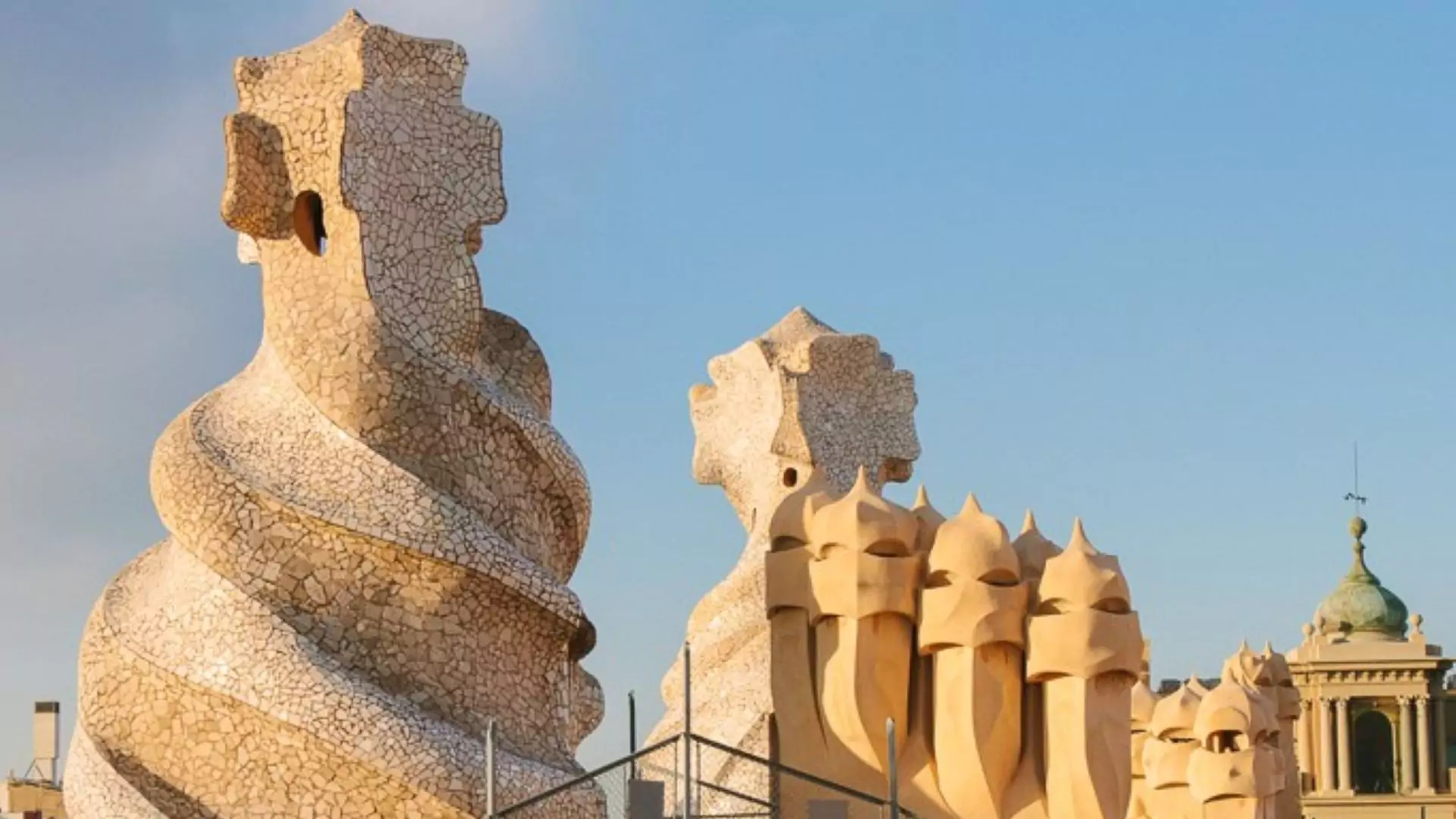
La Pedrera (Barcelona) rooftop | Source: voicemap
Park Güell (Barcelona)
The park’s serpentine bench is a stunning example of Trencadís, with vibrant, irregular patterns. It combines functionality and aesthetics, inviting visitors to rest amid a colorful mosaic landscape.
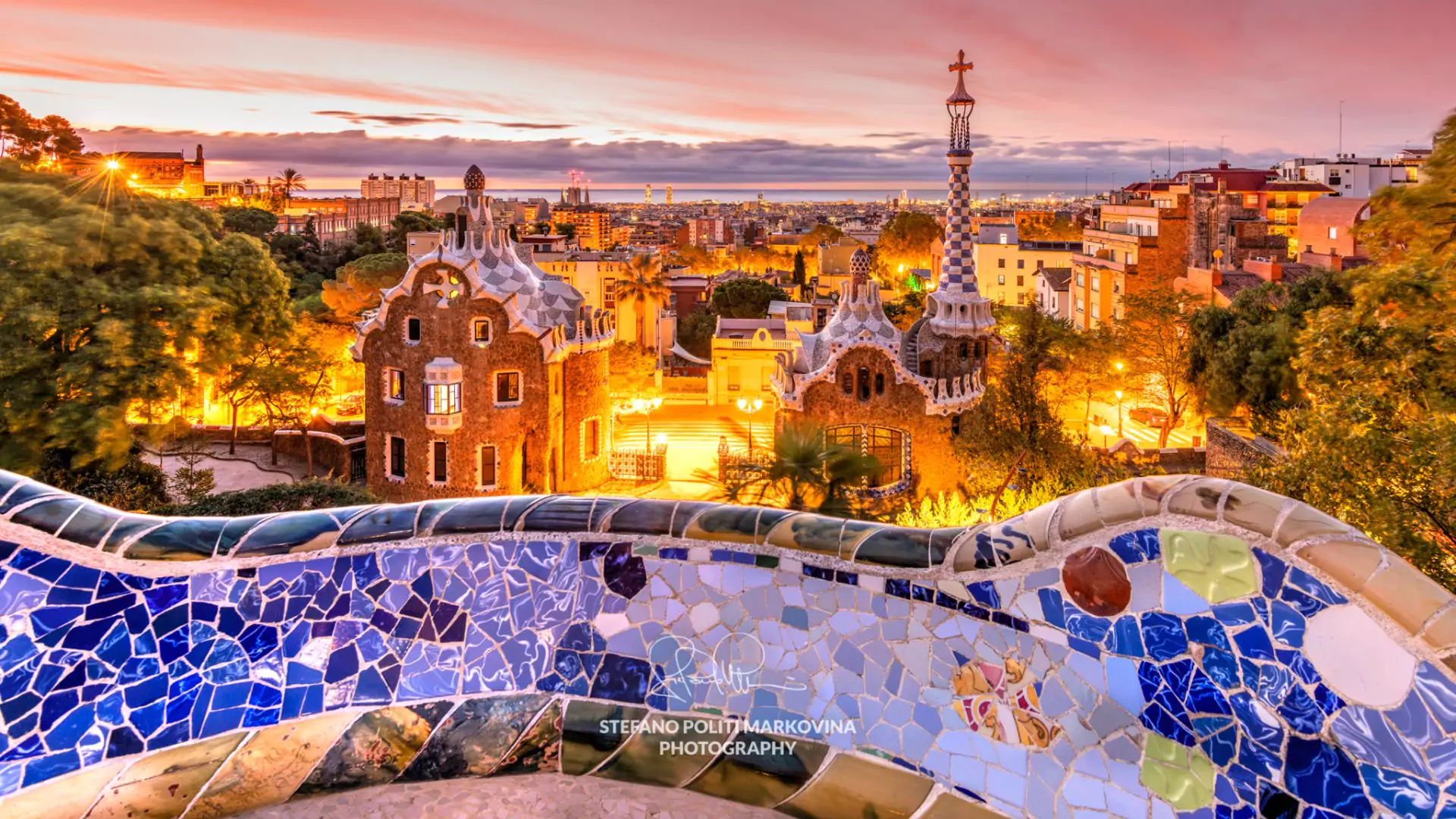
Park Güell (Barcelona) | Source: stefanopolitimarkovina
Sagrada Família (Barcelona)
The mosaics adorning the basilica’s towers feature intricate Trencadís designs, blending texture and color. These elements symbolize nature and spirituality, integral to Gaudí’s architectural philosophy.
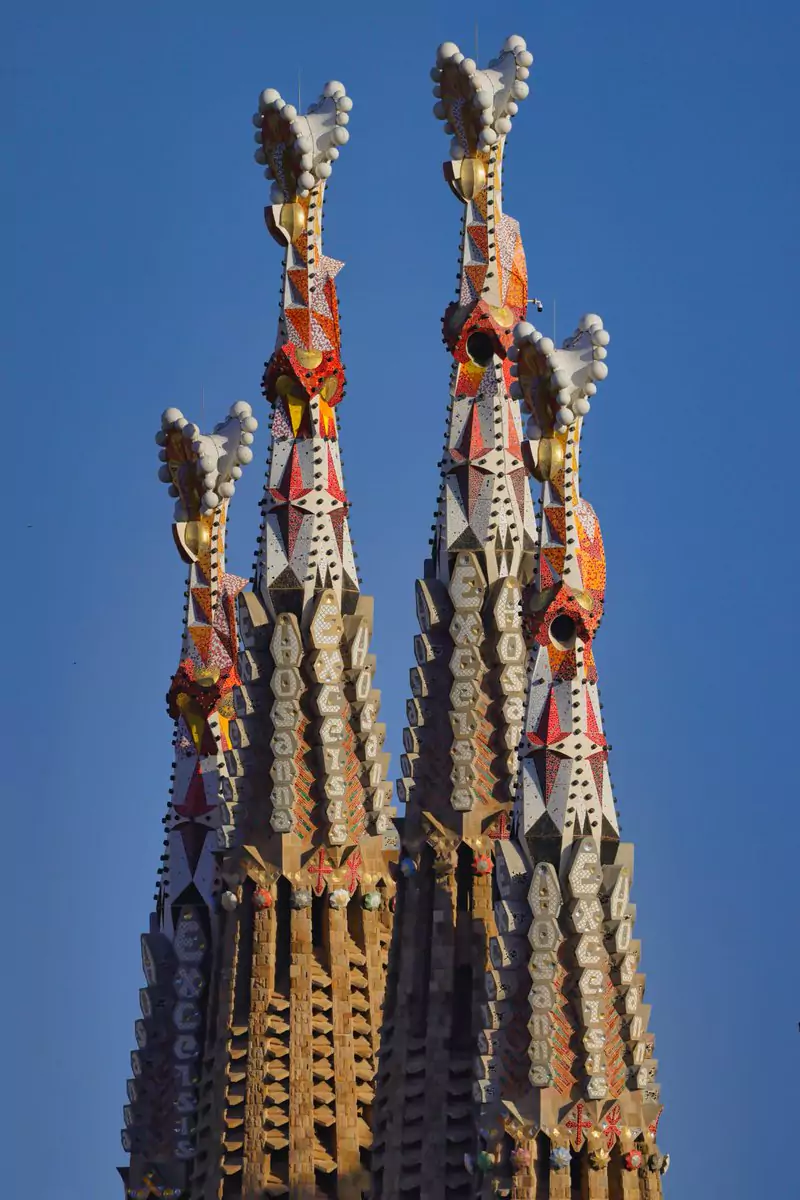
Sagrada Família (Barcelona) Basilica’s Tower top | Source: x
Casa Batlló (Barcelona)
The façade is adorned with shimmering Trencadís fragments, creating a dynamic play of light and color. This design evokes organic, wave-like forms, reflecting Gaudí’s inspiration from nature.
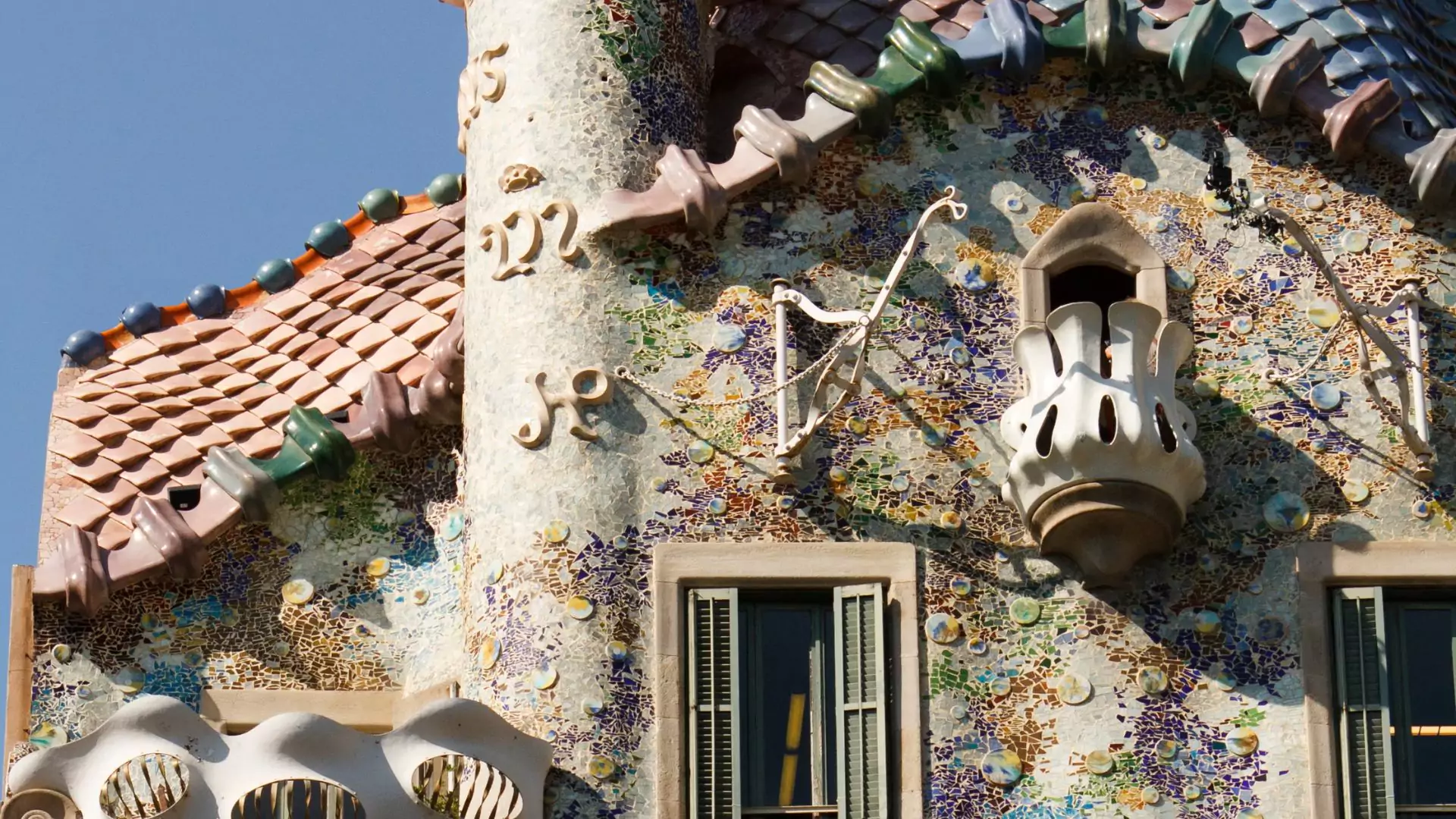
Casa Batlló (Barcelona) exterior facade | Source: cntraveler
Postmodern Usage and Revival
While Trencadís may seem like an age-old technique for enhancing the beauty of built structures, many modern designers have drawn inspiration from its concept of irregular shapes.
The Big See Fashion Design Awards 2024 winner showcased cross-disciplinary methodology in fabric and material development, incorporating Trencadís-inspired concepts into her designs. By combining stretch and non-stretch yarns, she created patterns that echoed the abstract quality of Trencadís.
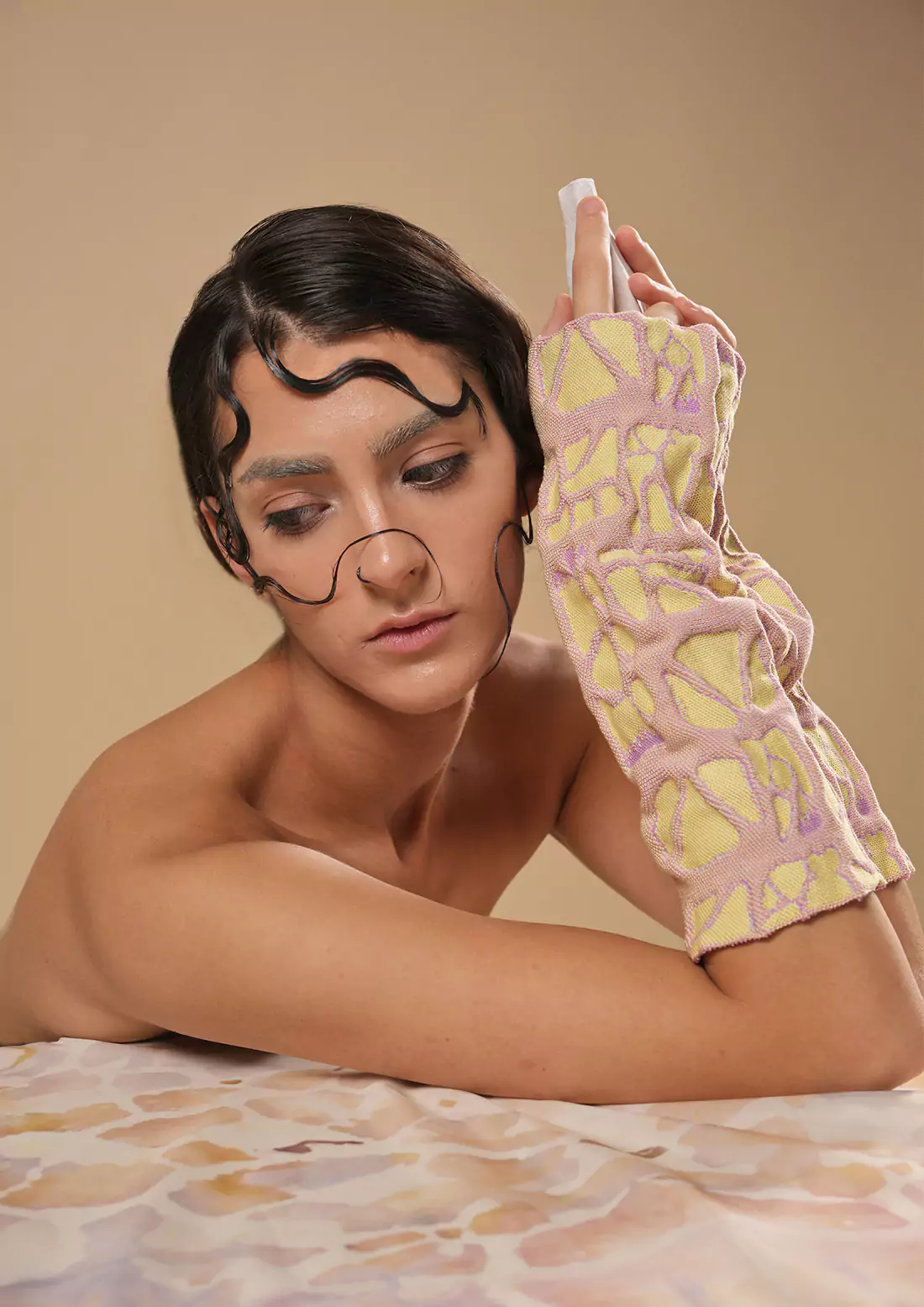
Big See Fashion Design Awards 2024 winner | Source: bigsee
The City of Arts and Sciences in Valencia, one of Calatrava’s most celebrated projects, showcases trencadís extensively. The monumental structures, such as the Hemisfèric and the Museu de les Ciències Príncipe Felipe, are adorned with this mosaic technique.
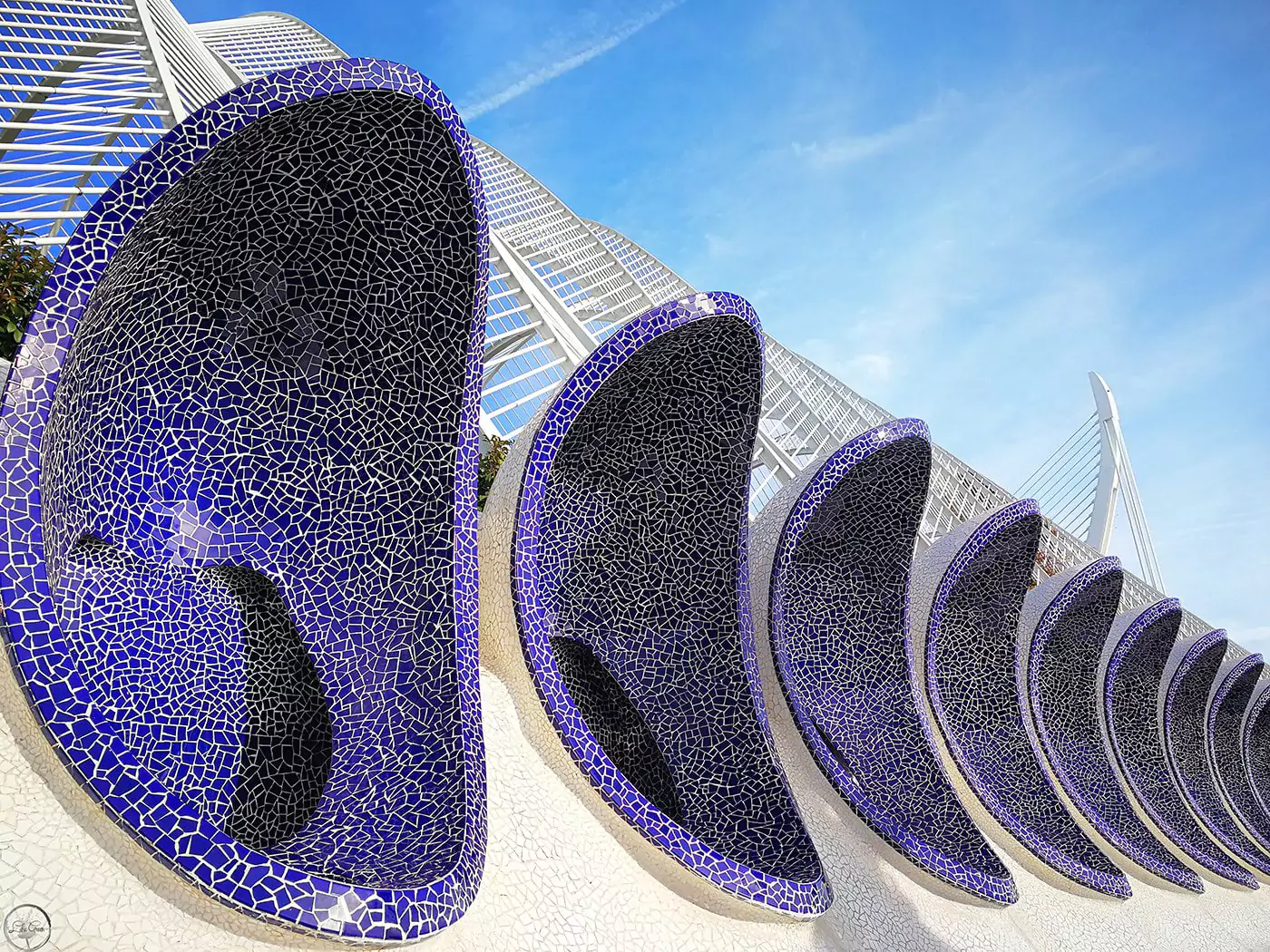
City of Arts and Sciences, Valencia | Source: lillagreen
Even in the prefabrication market suppliers such as Mosaics Torra manufacture hydraulic tiles and tapestry inspired by the works of Antoni Gaudí, which can be used in interior design.
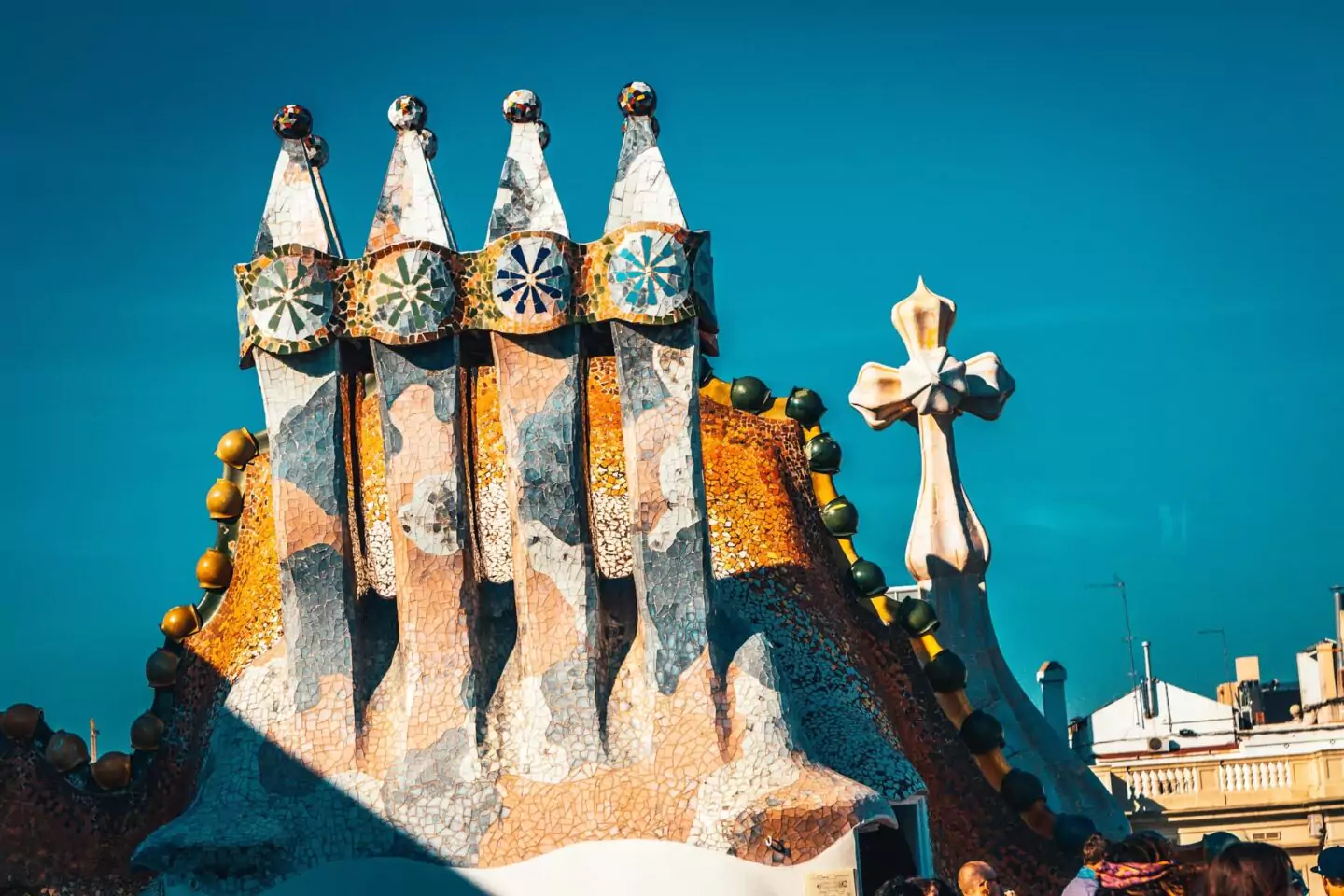
Casa Batlló, Rooftop | Source: todobarro
Trencadís is a timeless technique that celebrates imperfection and transformation. What was once discarded finds new purpose, contributing to creations of remarkable beauty. It continues to inspire contemporary design, and reminds us that even the fragments of our lives, when carefully curated, can become the foundation for something extraordinary.
References
https://todobarro.com/en/what-is-trencadis-technique/
https://bellesguardgaudi.com/en/you-know-what-trencadis-the-technique-of-a-genius/
https://blog.sagradafamilia.org/en/the-trades/trencadis-mosaic-hallmark-of-gaudi/
https://bigsee.eu/trencadis/ https://blog.barcelonaguidebureau.com/trencadis/
https://lillagreen.com/city-of-arts-and-sciences-valencia/
https://mosaicstorra.com/en/peplica-of-antique-tiles/