For millennia, the Middle East has stood as the undisputed cradle of the written word. It was here, upon the sun-baked clay tablets of Mesopotamia, that humanity first learned to record its stories, and where the grand House of Wisdom in Baghdad illuminated the Golden Age of Islam. Today, this reverence for scholarship is experiencing a breathtaking architectural renaissance. Across the region, nations are raising monumental libraries that boldly reimagine what a repository of knowledge can be. These sanctuaries intertwine cutting-edge design with deep-rooted heritage, transforming the quiet solitude of reading into immersive, awe-inspiring cultural experiences.
Here are six remarkable libraries where history, architecture, and literature converge in spectacular harmony:
King Abdulaziz Center for World Culture (Ithra), Dhahran, Saudi Arabia
Rising from the stark desert landscape of Dhahran like a collection of colossal, polished zen stones, Ithra is a monumental triumph of contemporary design. Conceived by Snøhetta, the complex’s striking organic forms are clad in an intricate skin of bent stainless-steel tubes, reflecting the harsh sun with a mesmerizing, liquid-like gleam.
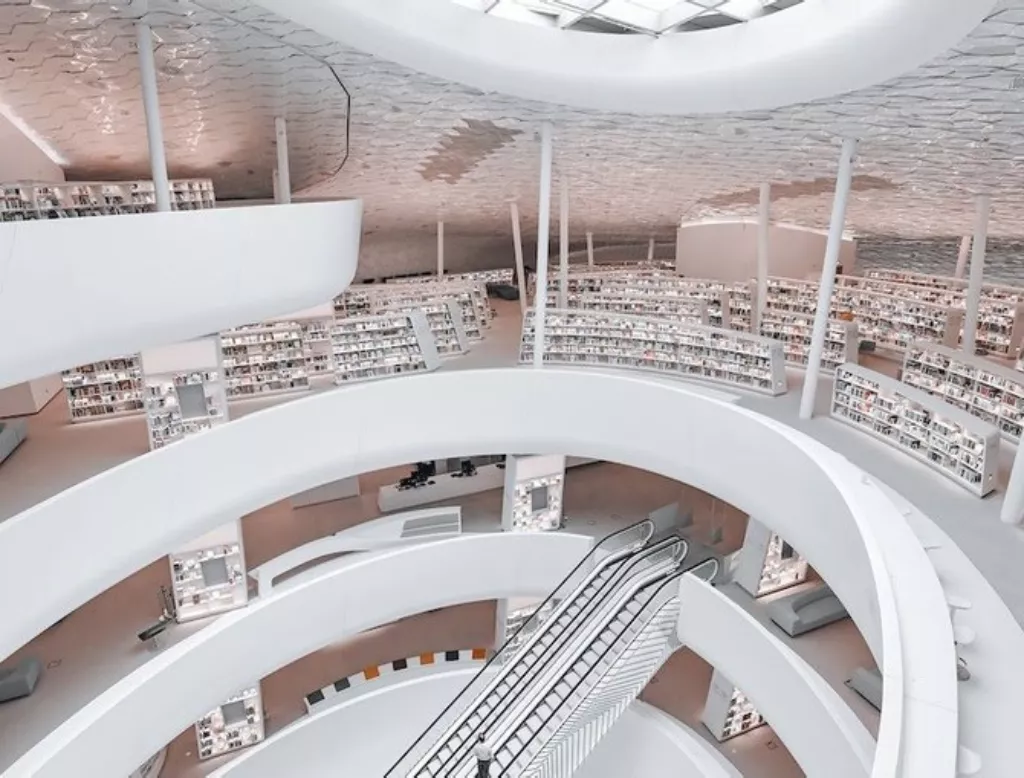
Library Interior View with Iconic Stairs | Arab News
The library within this celebrated cultural hub is a four-story marvel of fluid spatial planning, specifically designed to foster interactive learning. It houses over a quarter of a million volumes, but its true genius lies in its interior morphology. The spaces flow seamlessly into one another without rigid barriers, featuring a central atrium bathed in diffused natural light. Fun fact: the building’s boulder-like composition is deeply symbolic; subterranean levels represent the past, the ground level embodies the present, and the soaring Knowledge Tower reaches toward the future.
Qatar National Library, Doha, Qatar
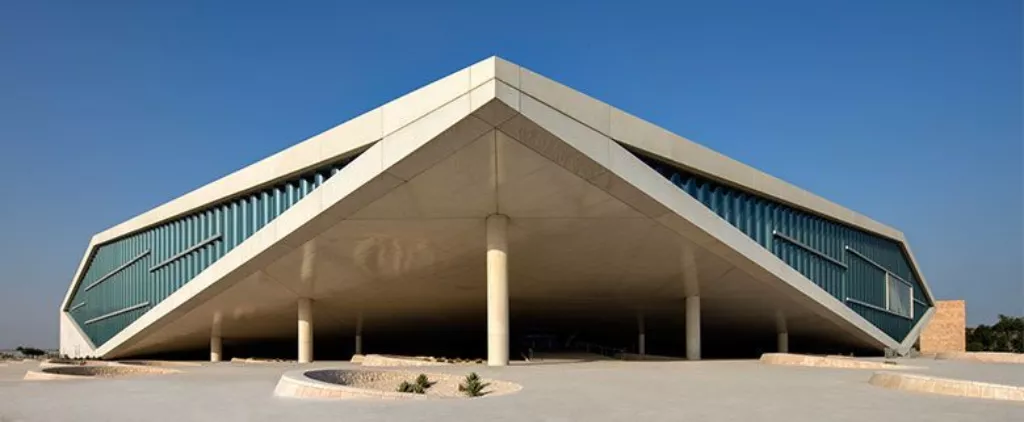
Library Exterior View | Arch Daily
In the heart of Education City, the Qatar National Library emerges from the desert landscape like folded paper or a massive diamond resting on the earth. Conceived by renowned architect Rem Koolhaas and OMA, the building’s interior is a masterpiece of spatial design. Without distinct floors or hidden rooms, the vast interior is built on sweeping terraces of marble bookshelves doubling as structural floors.
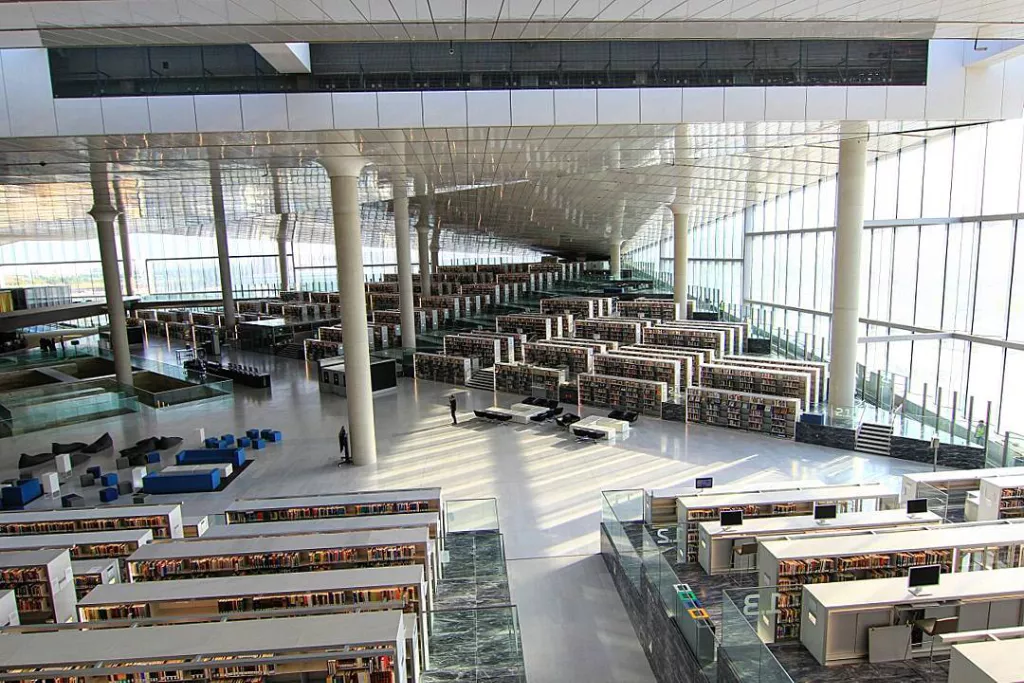
This allows visitors to see the collection in a single, breathtaking glance. The crown jewel lies excavated deep into the center. Here, beneath softly glowing glass, lie some of the rarest Islamic manuscripts and historical globes, safely insulated from the blazing Qatari sun.
Mohammed Bin Rashid Library, Dubai, UAE
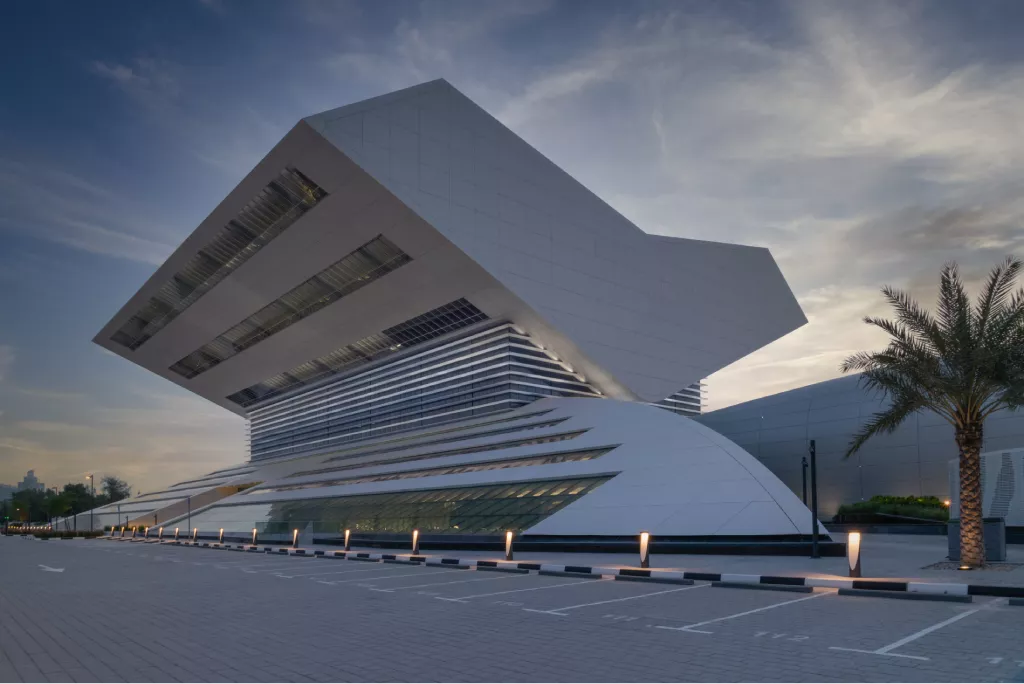
Exterior View | MBLR
Situated along the historic Dubai Creek, the Mohammed Bin Rashid Library is an architectural marvel honoring Islamic heritage. Designed by a global consortium, the striking seven-story structure is shaped like a rehal, the traditional wooden book rest used for centuries to hold the Holy Quran. Beyond its profound structural symbolism, it boasts an incredibly advanced automated storage and retrieval system.
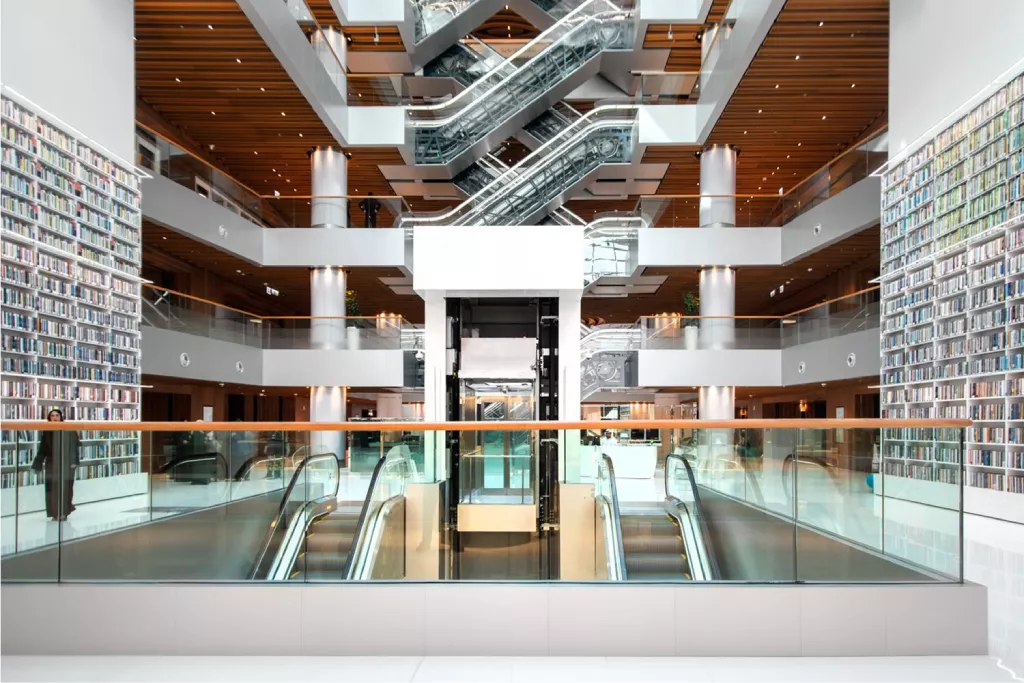
Interior View | Design Concept
A subterranean monorail network utilizes smart robots to locate and deliver requested books to the reading rooms in mere minutes. A fascinating highlight is the exclusive Treasures of the Library exhibition. This museum-like enclave safeguards priceless global antiquities, including early Quranic manuscripts, exquisite botanical drawings, and rare first editions of literary masterpieces like Miguel de Cervantes’s Don Quixote.
House of Wisdom, Sharjah, UAE
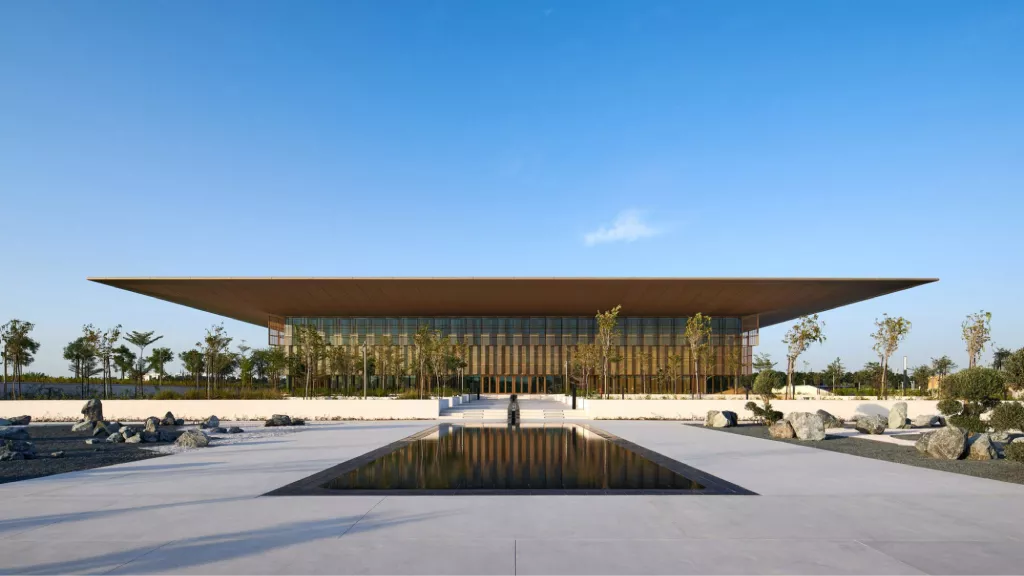
Exterior View | Dezeen
To commemorate Sharjah’s designation as a UNESCO World Book Capital, Foster and Partners designed a stunning library for the future. The House of Wisdom is a highly transparent, two-story structure defined by its massive, overhanging roof that appears to float effortlessly. This cantilevered canopy provides crucial shade, shielding the interior from harsh desert glare while filtering light through geometric aluminum screens.
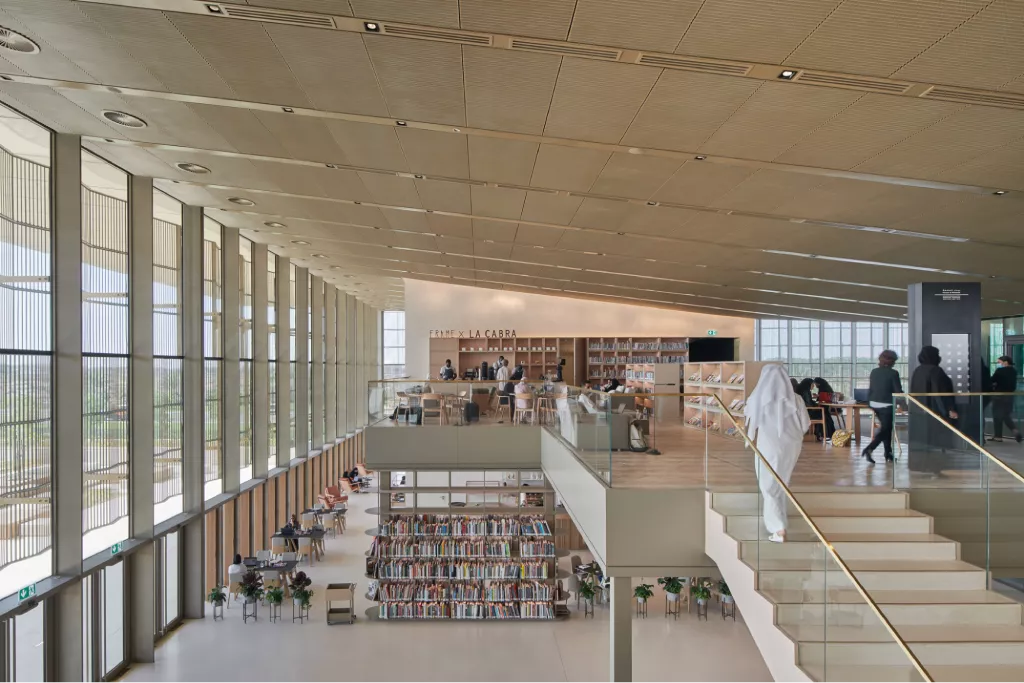
Interior View | Dezeen
Unlike traditional silent archives, it was conceived as a vibrant social hub and a high-tech book machine. It features fabrication labs and an Espresso Book Machine capable of printing and binding bespoke paperbacks in minutes. The tranquil outdoor gardens feature The Scroll, a spiraling steel monument by British sculptor Gerry Judah, echoing the ancient Arabic scrolls of antiquity.
King Fahad National Library, Riyadh, Saudi Arabia
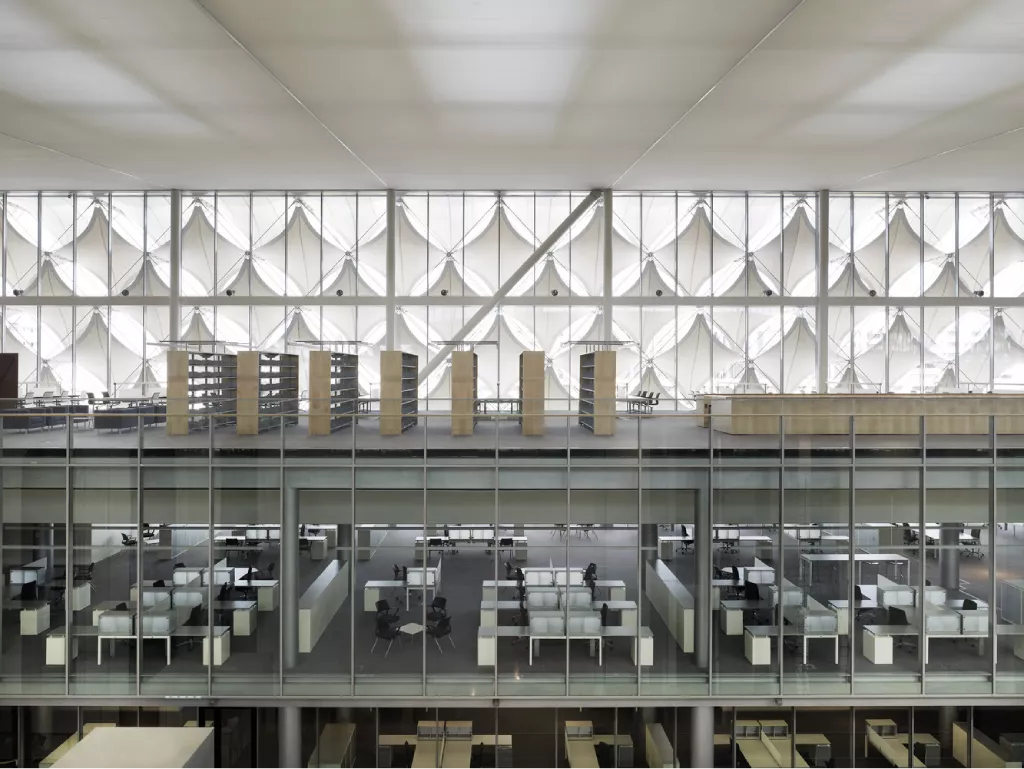
Interior View | Arch Daily
This library represents one of the most brilliant urban transformations in the Middle East. Tasked with expanding a cruciform concrete library built in the 1980s, Gerber Architekten chose a radical approach: rather than demolishing the old structure, they enclosed it entirely within a massive new cuboid shell. The original building now stands repurposed as a protective vault for delicate literary treasures.
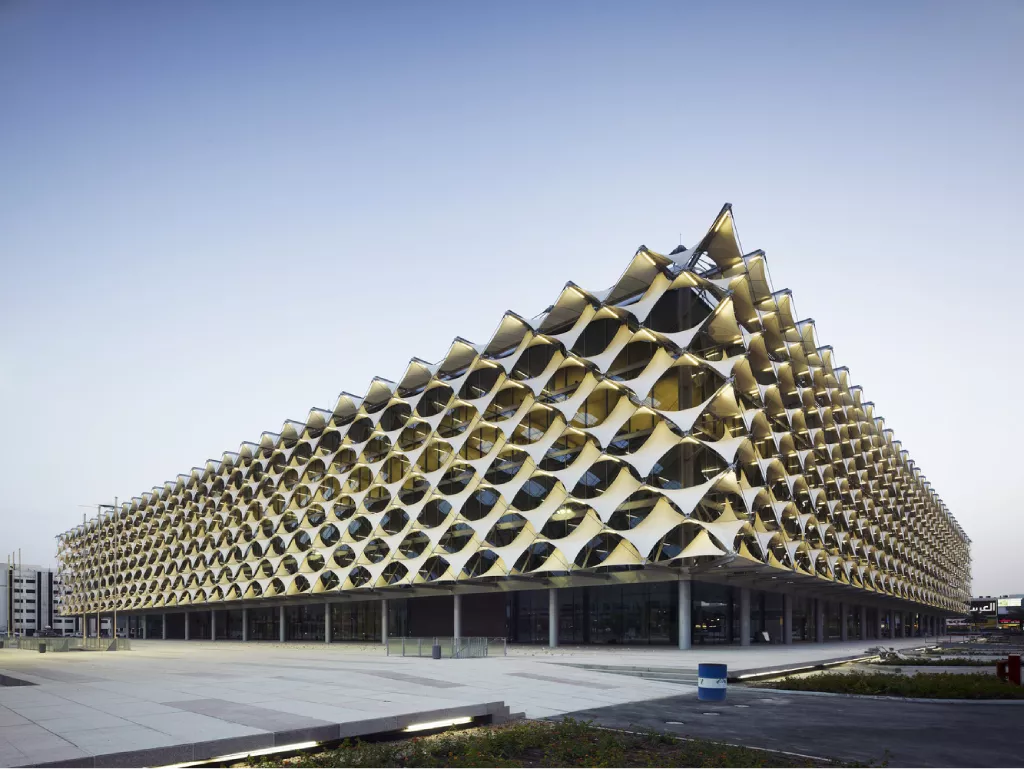
Exterior View | Arch Daily
The exterior facade truly captures the imagination, wrapped in a mesmerizing grid of white, lozenge-shaped textile awnings made from Teflon-coated fiberglass. These geometric sails utilize traditional Middle Eastern principles of temperature control, acting as a breathable skin deflecting the intense Riyadh heat while permitting soft daylight. By night, the building acts as a glowing lantern.
Beyazit State Library, Istanbul, Turkey
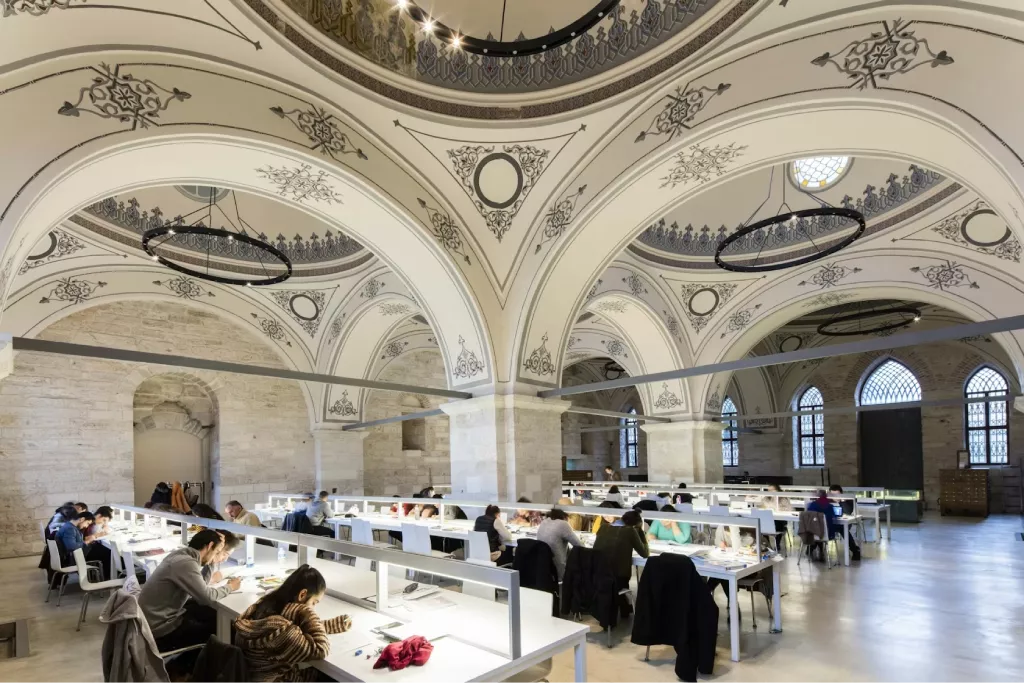
Restored Interior View | Arch Daily
Nestled in the historic heart of Istanbul, the Beyazit State Library offers a masterclass in the delicate balance of preservation and modern intervention. Originally constructed in the sixteenth century as an Ottoman soup kitchen, it became a library in the late nineteenth century. During a meticulous restoration by Tabanlioglu Architects, rather than forcing modern elements into the ancient stone walls, they introduced minimalist black glass boxes to house rare Islamic manuscripts. These sleek, climate-controlled cubes sit detached from the original architecture, glowing beneath multi-domed ceilings. A serendipitous discovery elevated the site: workers unearthed the ruins of a Byzantine-era church beneath the courtyard. Today, visitors walk over transparent glass floors, treading above history surrounded by towering walls of literature.
These magnificent institutions are profound declarations of cultural pride, proving the physical library is far from obsolete in our digital world. Instead, it is triumphantly reborn. From the sunlit terraces in Doha to the transparent glass vaults in Istanbul, these architectural wonders honor the region’s unparalleled literary legacy.
References
- https://www.abouther.com/node/49811/entertainment/art-books/4-must-visit-libraries-middle-east#slide/3
- https://scoopempire.com/pages-of-history-the-middle-easts-most-impressive-libraries/
- https://www.middleeasteye.net/discover/arab-world-five-most-impressive-libraries
- https://scoopempire.com/book-lovers-paradise-6-exceptional-libraries-in-the-middle-east/
- https://curlytales.com/web-stories/8-best-libraries-in-the-middle-east-one-should-visit/
- https://muslimheritage.com/libraries-of-the-muslim-world-859-2000/
- https://www.cntraveler.com/galleries/2014-09-02/10-of-the-worlds-most-beautiful-libraries