To counter today’s digital noise and sensory overload, the design world is collectively turning its gaze toward the profound stillness of the arid landscape. We are witnessing a definitive departure from the curated maximalism of the past decade, moving toward a philosophy grounded in earth, resilience, and restraint. This is the era of Desert Modernism, a movement that began as an architectural response to sun-drenched climates and has now evolved into the defining direction for global luxury interiors.
Desert Modernism is not merely a stylistic trend; it is a holistic experience of living comfortably within extremes. It takes the raw beauty of the desert and distills it into interiors that feel simultaneously ancient and entirely contemporary. From the sprawling red-rock canyons of the American Southwest to the rapidly evolving skylines of the Middle East, this aesthetic is reshaping how we define sanctuary, offering a refuge that feels grounded, unpretentious, and deeply connected to the natural world.
From Mid-Century Roots to Global Resonance
To truly understand where this aesthetic is going, we must look to where it began. The movement finds its foundational roots in 1950s Palm Springs, pioneered by visionary architects like Albert Frey and Richard Neutra. Neutra’s iconic Kaufmann Desert House, later meticulously restored to its former glory by the acclaimed firm Marmol Radziner, set the original benchmark. It introduced the revolutionary concept of the desert pavilion: flat rooflines, expansive planes of glass, and a seamless visual flow that invited the rugged boulders of the San Jacinto Mountains straight into the living room without sacrificing domestic comfort.
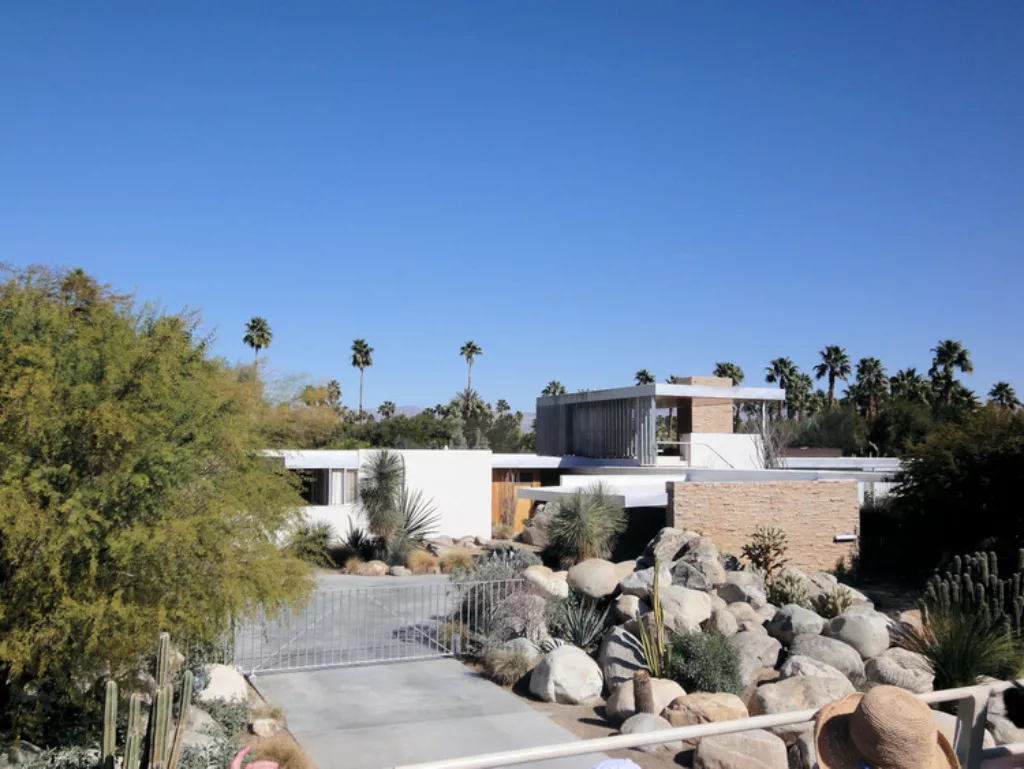
Kaufmann House Exterior View | Archdaily
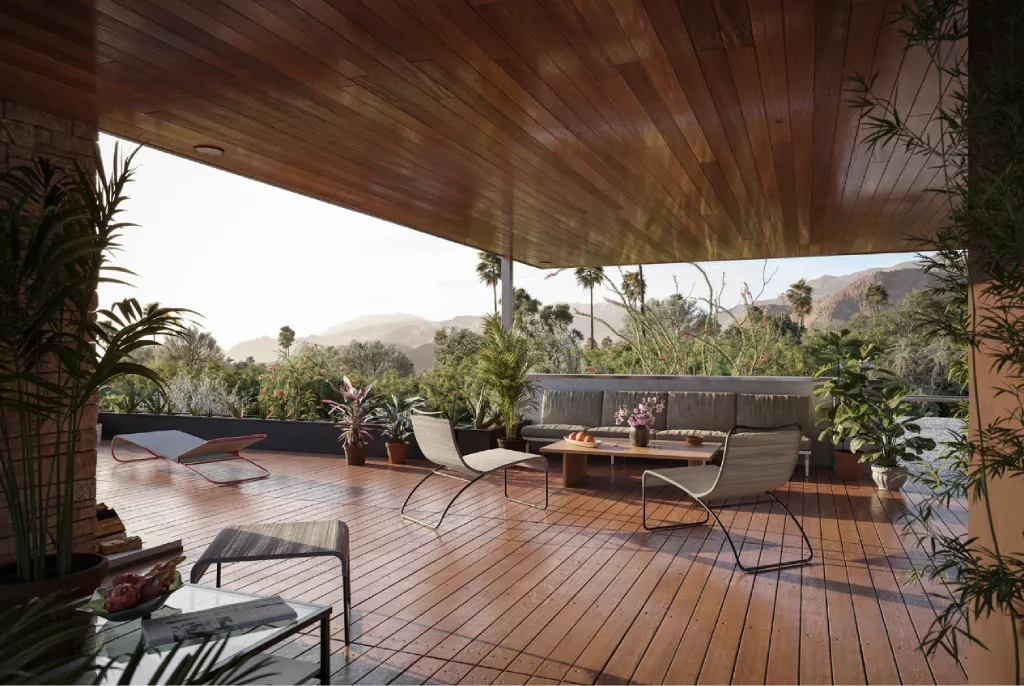
Kaufmann House Interior | Behance
Decades later, luxury hospitality elevated this mid-century blueprint into an immersive, spiritual experience. The undisputed catalyst for the modern era was Amangiri in Canyon Point, Utah. Designed collaboratively by architects Rick Joy, Wendell Burnette, and Marwan Al-Sayed, the resort feels carved directly from the surrounding Navajo sandstone. Its most iconic feature is the swimming pool built seamlessly around an ancient, jutting stone escarpment, demonstrating a profound respect for existing topography. By framing the dramatic mesas, it proved that extreme minimalism, executed with the right tactile materials, translates into ultimate luxury.
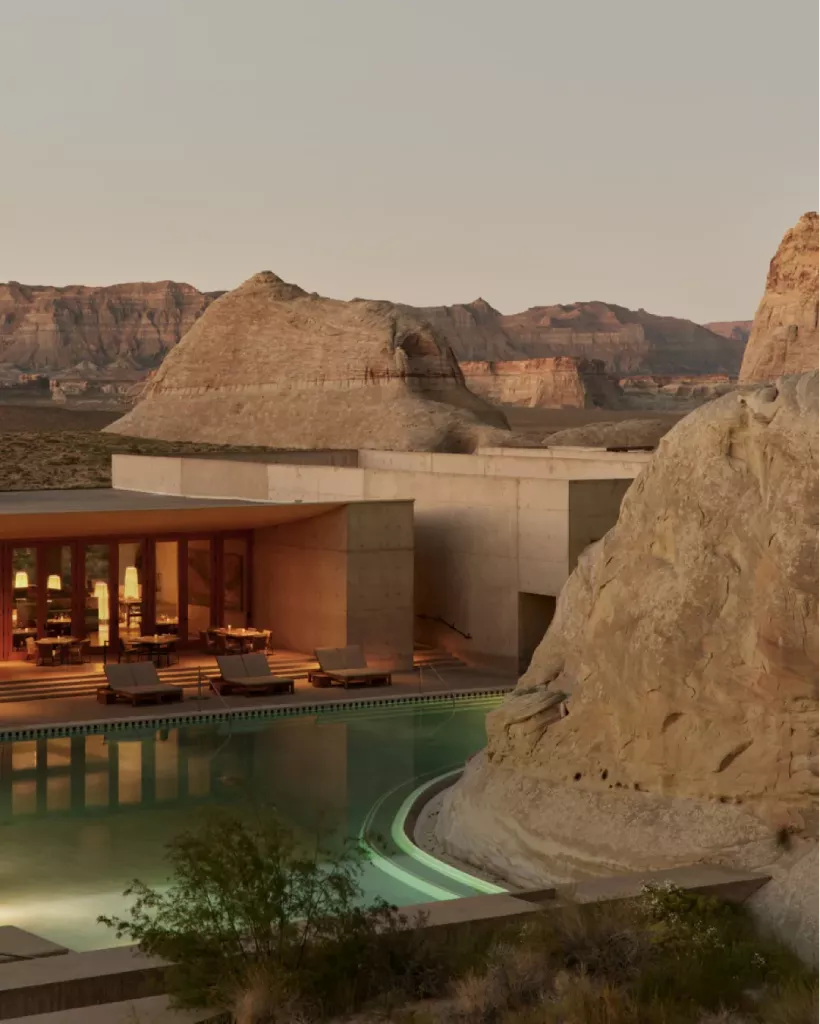
Amagiri Hotel | MC&Co.
Today, this architectural language has triumphantly crossed oceans. In the Middle East, the desert aesthetic is returning home, merging mid-century restraint with rich regional heritage. Our Habitas Ras Abrouq in Qatar utilizes sculptural forms and local stone to create immersive stillness. Renowned regional design voices note that a fresh wave of private villas across Saudi Arabia and the UAE are pivoting away from imported European opulence. Instead, they are embracing passive cooling techniques, xeriscaping, and interiors that celebrate the golden environment outside.
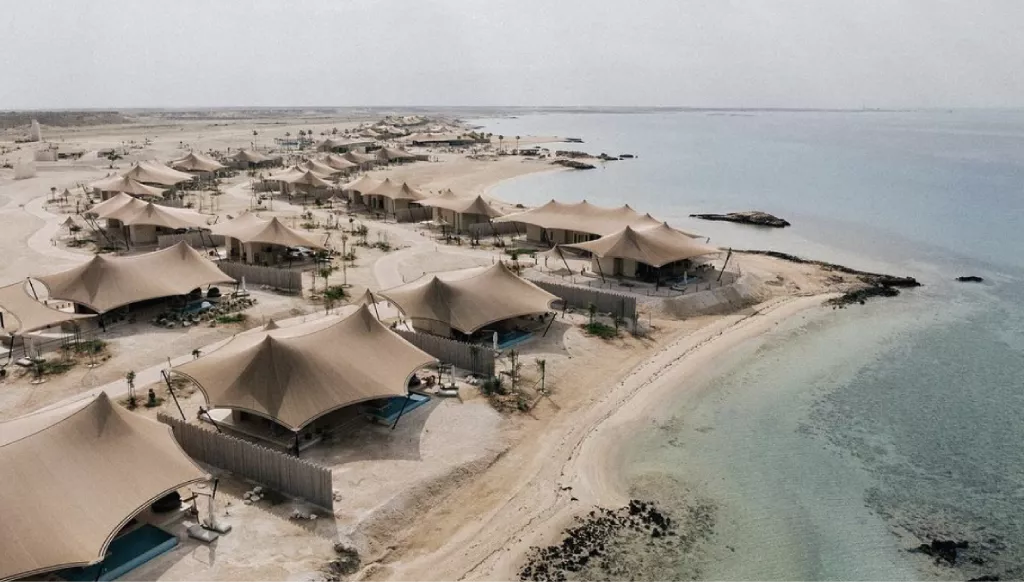
Our Habitas Aerial View | Compass
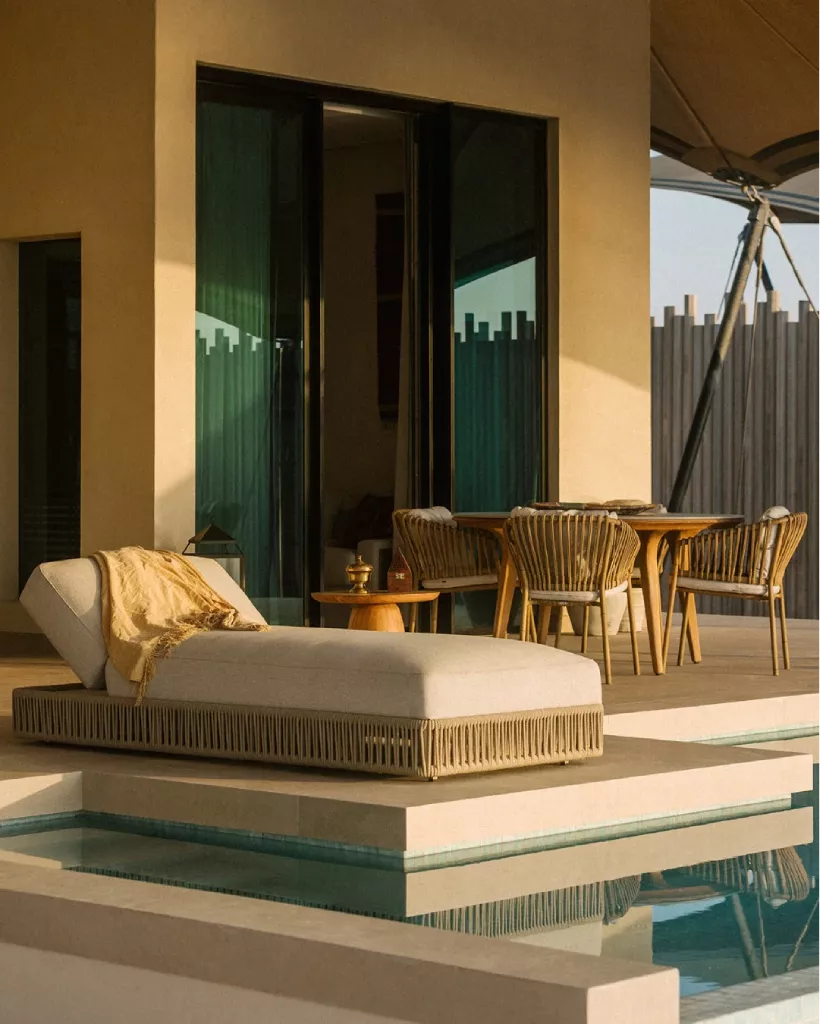
Baroq Villa in Our Habitas | OH
Fascinatingly, this arid inspiration is no longer confined strictly to the desert. At The Eve Hotel in Sydney’s Redfern district, SJB Architects masterfully translated the desert mood for a cosmopolitan landscape, utilizing soft ochres, warm stone finishes, and drought-tolerant rooftop gardens to create a serene inner-city oasis.
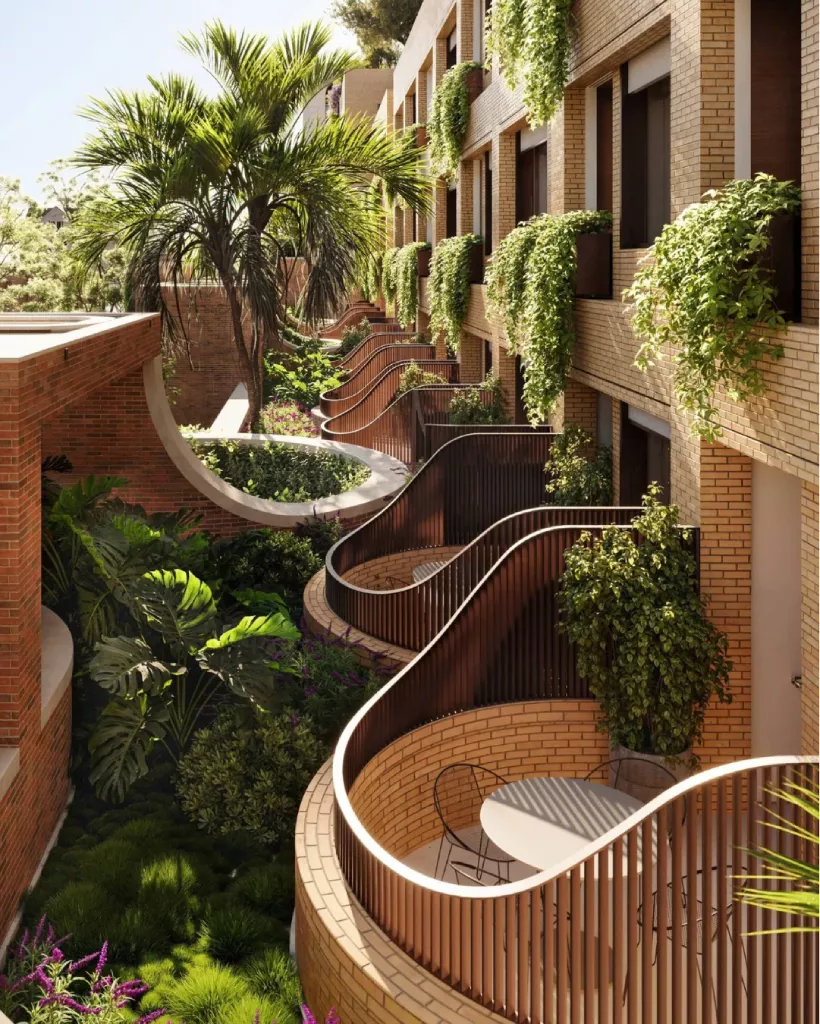
Eva Hotel Exterior View | MC&Co.
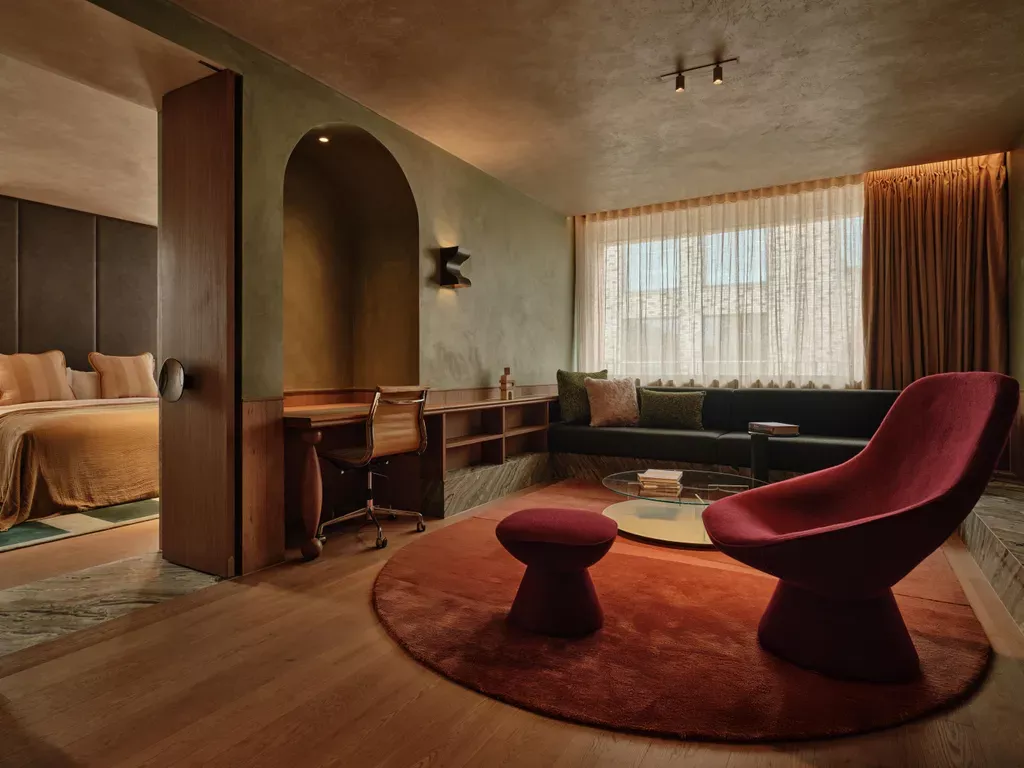
Eva Hotel Interior View | Wallpaper
Cultivating the Arid Aesthetic
Achieving a Desert Modern interior requires a disciplined approach. It is an aesthetic of subtraction, where every remaining element must carry visual and tactile weight. Here is how the principles translate into residential spaces:
1. The Solara Palette
Step away from stark, clinical whites and cool grays. The foundation of this look is built on earthy, muted tones that mimic the shifting sands and rocky terrain. Look to warm taupe, soft clay, burnt umber, sandy beige, and dusty rose. These hues absorb light rather than reflecting it, creating an enveloping warmth. Deeper accents of olive green and charcoal can be utilized to elegantly anchor the space without overwhelming the senses.
2. Unapologetic Materiality
In a minimalist space, texture does the heavy lifting. Desert modernism demands organic materials showcased in their most authentic, unpolished forms.
- Stone: Travertine and quartzite with honed or tumbled finishes offer a natural, rugged elegance.
- Timber: Reclaimed or hand-finished woods treated with matte sealants, intentionally avoiding high-gloss varnishes.
- Textiles: Layering is essential to soften architectural lines. Incorporate heavy linen drapery, textured jute rugs, and hand-woven wool textiles to introduce a tactile quality that invites touch.
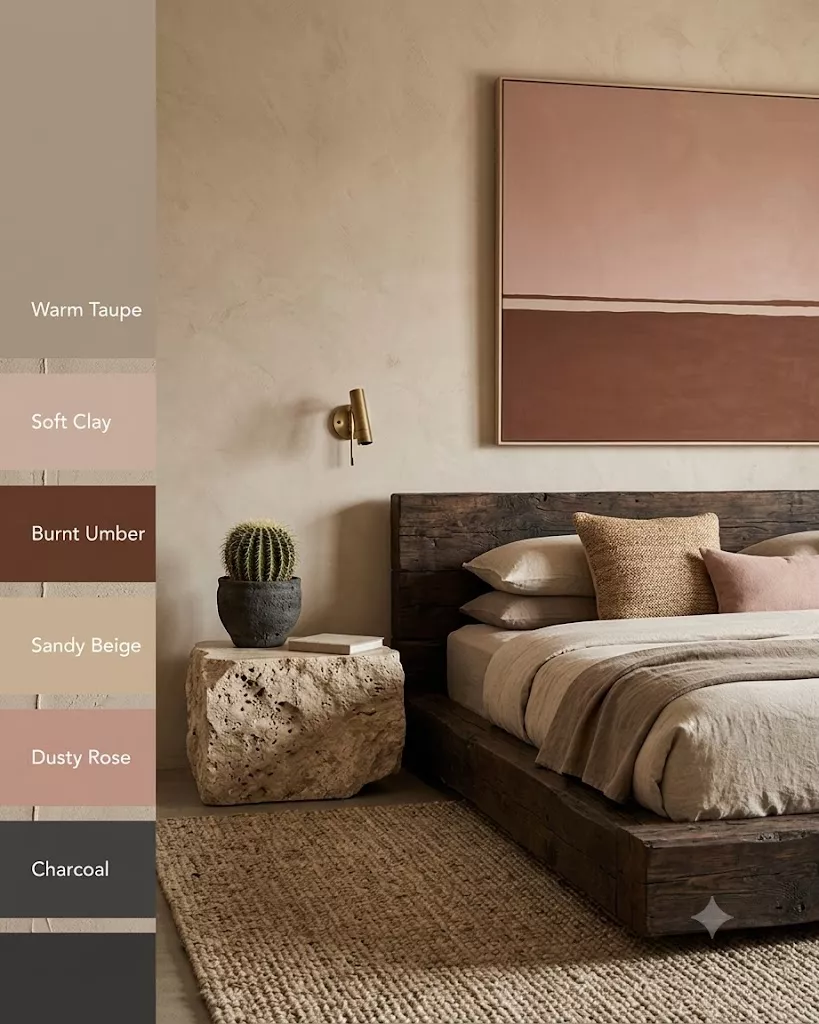
Color & Texture Mood Board | Gemini AI
3. Low-Profile Geometry
Furniture should always feel tethered to the earth. Opt for rounded silhouettes, low-line sectional sofas, and platform beds that keep sightlines entirely open and airy. This structural restraint allows the negative space, the empty areas surrounding the furniture to breathe, turning the layout itself into a deliberate design feature.
4. Ambient Desert Lighting
Lighting plays a crucial role in mimicking the serene atmosphere of the arid landscape. Abandon harsh overhead lights in favor of soft, diffused ambient lighting. Floor lamps, wall sconces, and ceramic pendants should cast a warm glow that replicates a fading desert sunset.
5. The Indoor-Outdoor Illusion
Desert architecture relies heavily on blurring boundaries. While we cannot all have sliding walls of glass opening up to a canyon, we can mimic the effect. Orient furniture toward natural light sources. Maximize skylights, clerestory windows, and sheer window treatments.
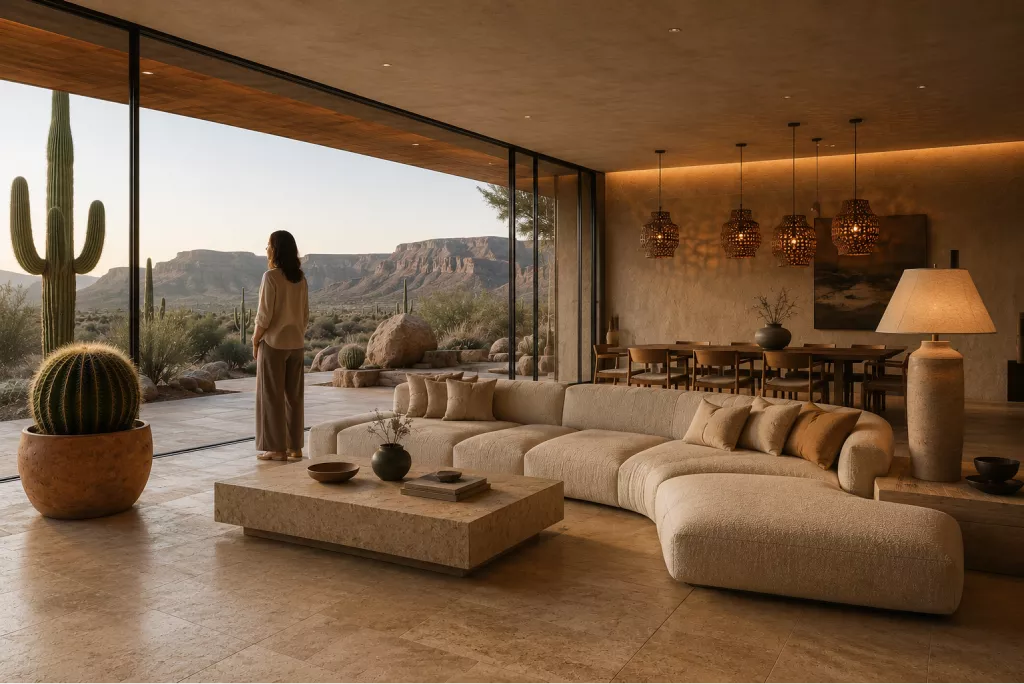
Furniture & Lighting Inspired by Desert Modernism | ChatGPT AI
Bring the outdoors in through sculptural, architectural greenery—think oversized cacti, agave, and euphorbia—which offer dramatic, living silhouettes with minimal maintenance. This connection to nature serves as a daily grounding mechanism, subtly reconnecting inhabitants to the rhythms of light, seasonality, and place. The enduring appeal of Desert Modernism lies in its profound psychological resonance. It does not demand attention through spectacle; instead, it cultivates a rare sense of calm, permanence, and emotional clarity. In a culture increasingly shaped by speed, distraction, and digital excess, its restrained materiality and quiet spatial generosity remind us that luxury is not always found in abundance. Sometimes, it is discovered in stillness—in rooms that breathe, surfaces that age gracefully, and spaces that allow us to slow down, observe, and simply be.
References
- https://mccotrend.com/blogs/mc-co-trend-journal/desert-modernism-the-rise-of-arid-aesthetics-in-contemporary-design?srsltid=AfmBOor2T-KfiqwhJGHNWyLiKwEkLWYhJPSJZmWK8l9zqswT-as46DTb
- https://www.rockymountainhardware.com/desert-modern-interior-design-guide/
- https://www.tileclub.com/blogs/news/a-definitive-guide-to-desert-modern-interiors?srsltid=AfmBOoqxH_Phd4lIyjZusTdoeaHFn-XBr08SvezHxs8HCuMMg4T1AdmK
- https://www.homesandgardens.com/gardens/desert-modernism-garden-design-trend
- https://www.wallpaper.com/architecture/residential/jill-lewis-architecture-palm-springs-desert-modern
- https://www.thelasvegasluxuryhomepro.com/blog/complete-guide-to-desert-modern-architecture/
- https://intrimmouldings.com.au/desert-modern-interior-design/
- https://compassesworld.com/from-middle-east/desert-modernism-rises-in-the-middle-east/
- https://www.wallpaper.com/travel/hotels/the-eve-hotel-sydney-review