To arrive in Chongqing is to abandon the certainty of the ground beneath your feet. In most of the world’s great cities, like New York, London, Tokyo, urbanism is a horizontal game, a grid laid flat against the earth, rising only when necessary. But in Chongqing, a sprawling megacity of 32 million souls in southwest China, the very concept of “ground level” is an illusion. Here, you might step out of a hotel lobby, believe you are on the street, and walk to a railing only to discover you are hovering twenty-two stories above a rushing river. You are not merely in a city; you are inside a topographical machine, a concrete organism that has colonized the sky and the mountains in equal measure.
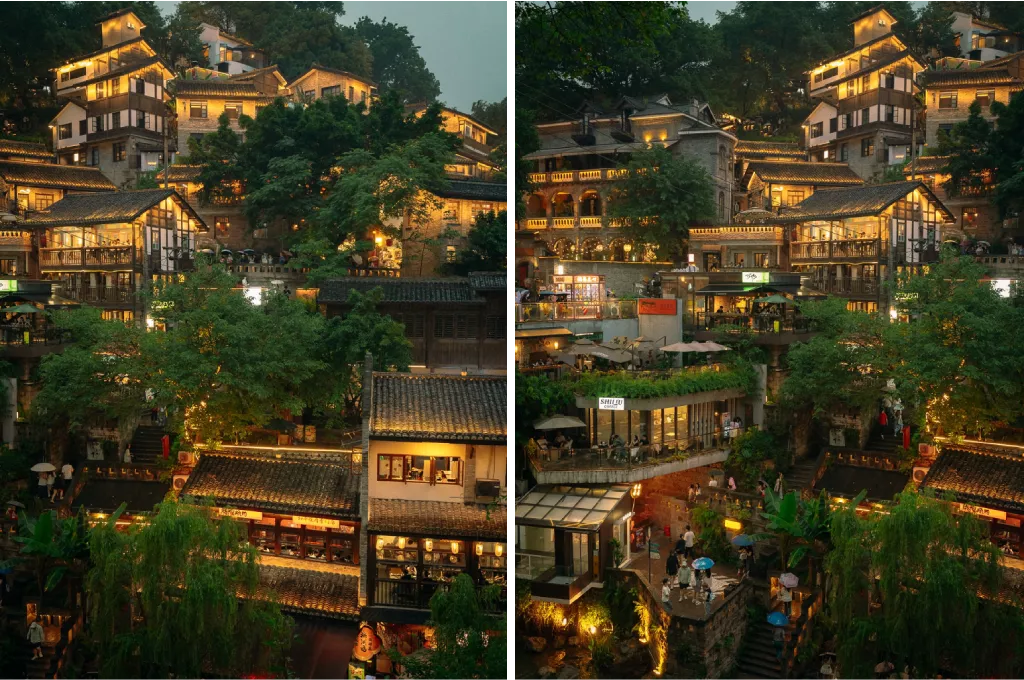
Historic Xiahao Old Street | Instagram
Often described by stunned visitors as “Hong Kong on steroids” or a real-life “Blade Runner set”, Chongqing is an architectural anomaly that defies the logic of traditional city planning. It is the world’s most complex vertical city, a place where maps are rendered useless, and GPS signals die in the confusion of overlapping elevations. To understand this “8D Magic City,” as locals and internet denizens call it, one must stop looking left and right, and start looking up, down, and through.
The Geography of Necessity
The chaos of Chongqing is not accidental; it is the child of a violent geography. The city sits at the dramatic confluence of the Yangtze and Jialing rivers, hemmed in by the parallel ridges of the Daba Mountains. In a flat city, expansion is easy: you just build further out. In Chongqing, the only way to build was up, or rather, into.
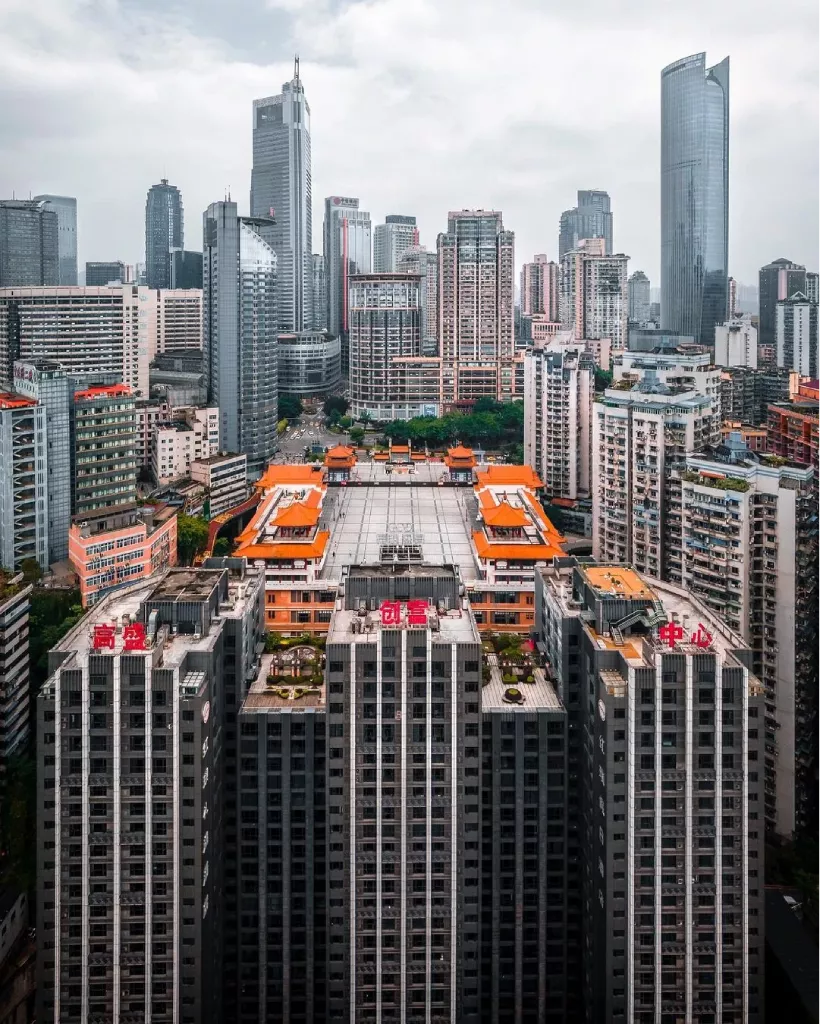
Multi-Dimensional Urban Landscape | PA
The terrain is so steep and jagged that architects could not simply level the land. Instead, they adapted to it with a ferocity so commendable. The result is a “vertical blueprint” where functionality overrides gravity. Skyscrapers sprout from steep slopes like bamboo. Foundations are dug into cliffs. The city doesn’t sit on the landscape; it clings to it. This geographical constraint has birthed an urban fabric that is layered like a geologic formation, or as architectural theorists have dubbed it, an “urban lasagna.”
Vertical Mix of Architecture & Urban Design
Chongqing doesn’t simply stack buildings atop hills; it weaves transit networks, residential towers, commercial districts, and public infrastructure into one vertical puzzle. Elevated highways hover above valleys, metro lines tunnel through mountains or emerge directly through residential towers, and skybridges reconnect districts severed by dramatic changes in levels.
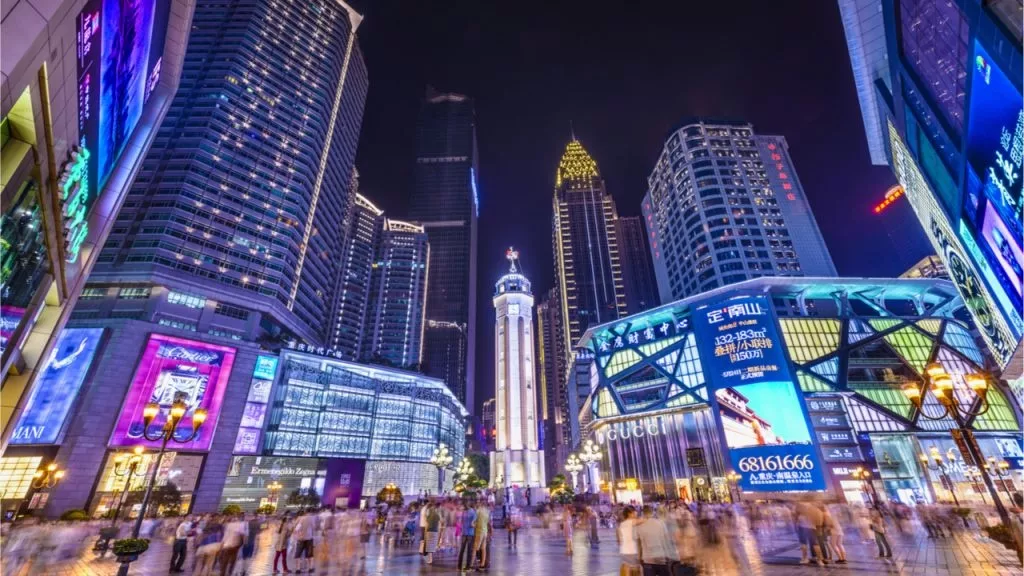
Chongqing Times Square | Jing Daily
One of the most iconic examples is Liziba Station: a subway station located between the sixth and eighth floors of a high-rise, allowing trains to pass straight through a residential building. This integration of transport and living space reduces noise pollution while redefining what constitutes “street-level.” As one resident described: “In Chongqing, we never really know what floor we’re on.” That confusion, though, is part of the city’s charm and its identity.
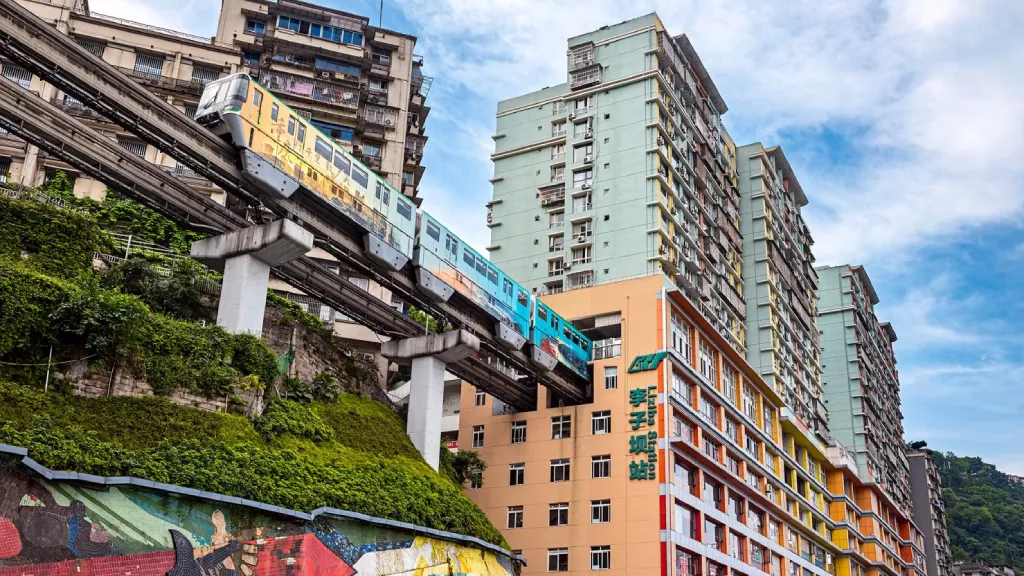
Liziba Station | CNN
Landmark Vertical Icons
While much of Chongqing’s verticality emerged as an organic housing, transit, and infrastructure, there are moments of purposeful architecture that dramatize the city’s identity:
Raffles City Chongqing: Completed in 2019, this cluster of eight towers topped by an enclosed 300-metre-long skybridge called “The Crystal” is perhaps the most ambitious architectural statement in the city. Designed by Moshe Safdie, the complex links four towers at their uppermost levels, creating a horizontal skyscraper hovering above the Yangtze–Jialing confluence. Within the skybridge: restaurants, observation decks, gardens, and panoramic views.
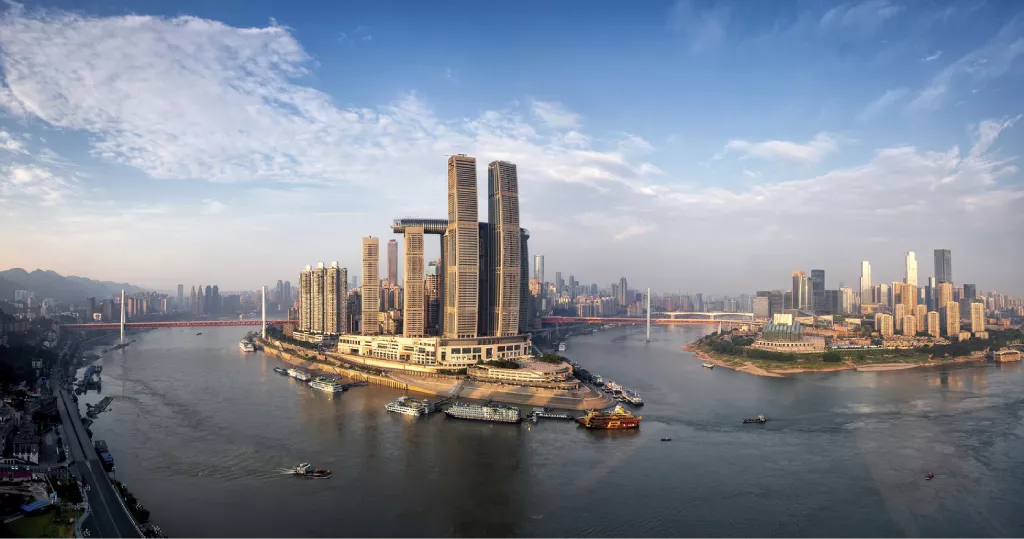
The Raffles Tower | Archdaily
Hongyadong (Hongya Cave): A striking contrast to contemporary skyscrapers: eight to eleven-storey stilt-house structures built along the riverside cliffs. With narrow terraces, wooden balconies, and the glow of lanterns at dusk, the complex evokes a storybook image as if drawn from a dreamlike film rather than a modern megalopolis.
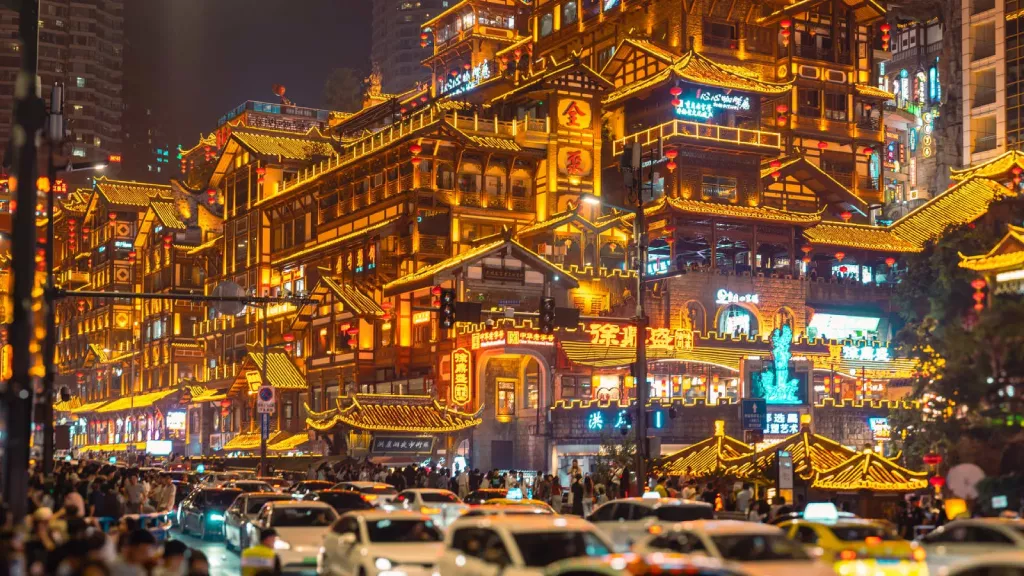
Iconic Hongya Cave complex | PA
The ubiquitous presence of escalators and stair–lift systems (for instance, the Huangguan Escalator) underscores that mobility here isn’t optional; it’s structural. This particular escalator, connecting different levels across the hilly terrain, serves as a vital artery for daily commuters.
Huangjuewan Interchange, a concrete knot that makes Los Angeles freeways look like country lanes. It connects roads in eight directions using five distinct layers of vertical traffic, with nearly 20 ramps weaving together like a basket. Missing an exit here isn’t just an inconvenience; it’s a commitment to a miles-long detour through the misty hills.
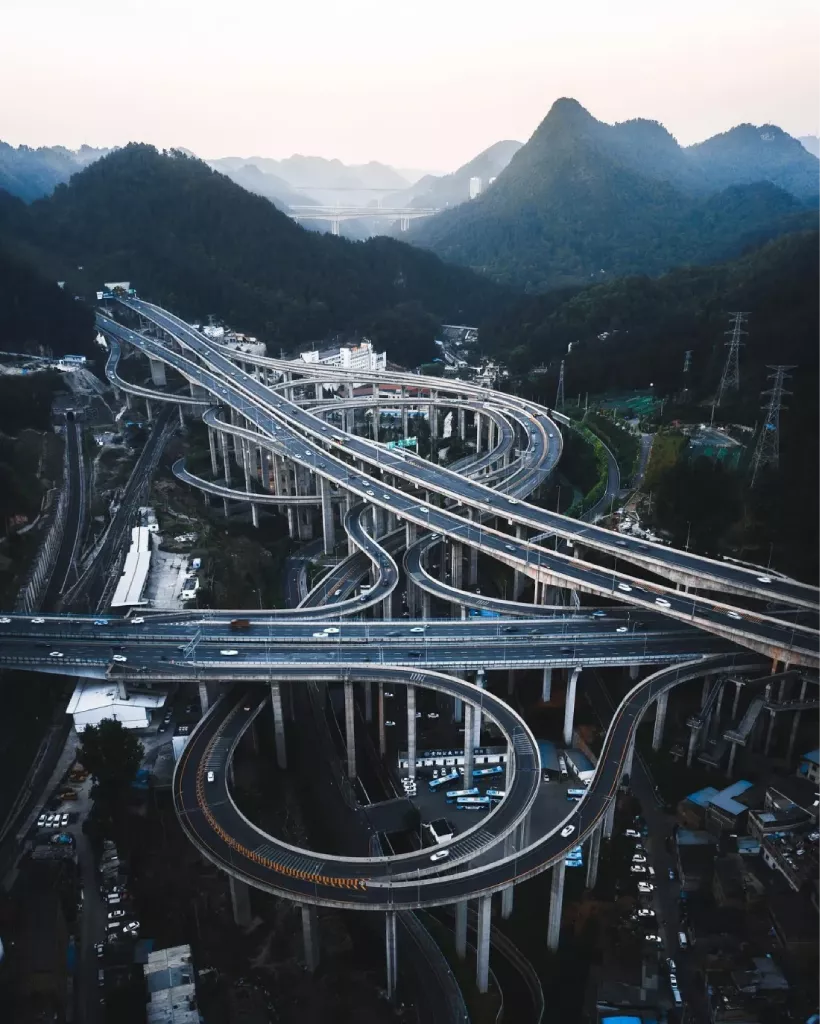
Multi-Layered Huangjuewan Interchange | PA
Living the Everyday Surrealism
In Chongqing, a typical commute can feel like a cinematic experience. One viral video by a local guide showed a journey starting at an 18-storey apartment block (without an elevator), descending stairs to street-level, crossing a bridge to a metro station, and ending up at an office on the “ground floor”, which turned out to be 22 floors above true ground.
But for residents, this is life: home, work, shopping, transit, all happening across layers. In a sense, Chongqing is less a city than a vertical organism: a pulsating network of human movement, vertical transit, and layered neighbourhoods.
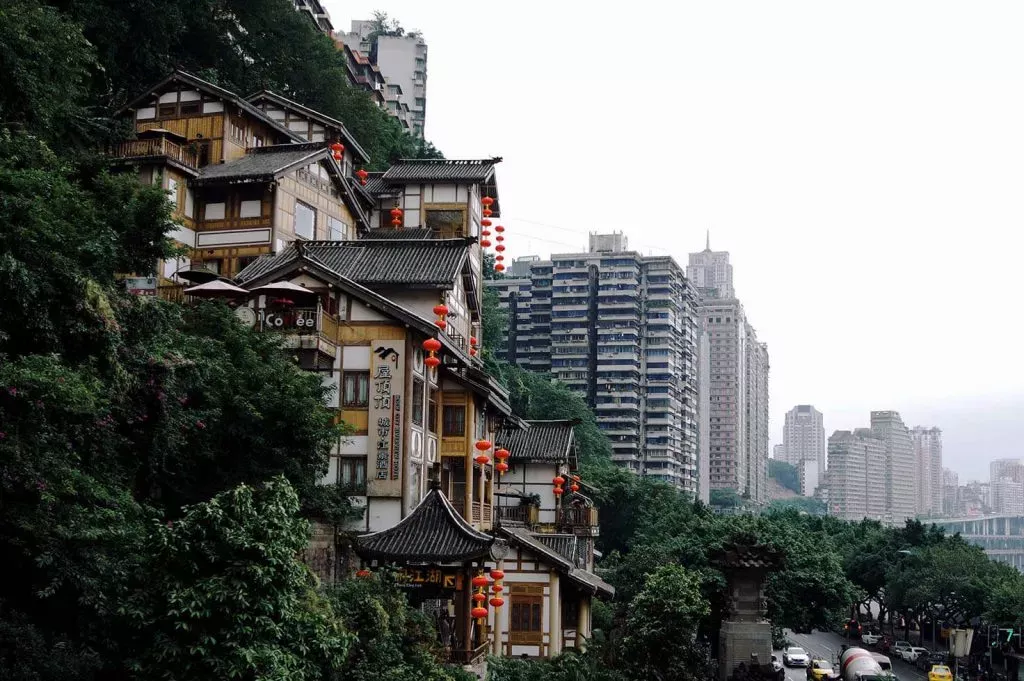
Hongyadong Houses at Chongqing | PA
Beyond the spectacle, Chongqing is a testing ground for urban resilience. Recognizing its vulnerability to flooding, the city has adopted “Sponge City” principles, integrating porous surfaces, terraced waterfronts, and rooftop gardens to absorb heavy rains. It is a city that is learning to breathe with its environment, rather than just concreting it.
To visit Chongqing is to witness the sheer force of human adaptability. It is a chaotic, noisy, humid, and utterly mesmerizing. In the 21st century, as cities run out of room, the world looks to Chongqing not just with curiosity, but with the realization that this vertical maze might just be the blueprint for the future of urban civilization.
References
- https://edition.cnn.com/travel/chongqing-china-tourism-cyberpunk-city-intl-hnk
- https://www.archdaily.com/943495/raffles-city-chongqing-safdie-architects
- https://parametric-architecture.com/worlds-most-complex-city-chongqing/?srsltid=AfmBOopBk_8QBeoVObW1Un9j49JBB2kQl5AfS9j2Z25fLDg3b0NlBGkG
- https://www.theguardian.com/travel/2025/jan/20/why-chongqing-china-is-my-wonder-of-the-world
- https://www.newsweek.com/worlds-biggest-city-china-chongqing-vertical-architecture-2100397
- https://www.architecturaldigest.com/story/chongqing-is-a-multilevel-maze-good-luck-finding-your-way-around
- https://www.ndtv.com/travel/viral-video-shows-chinese-city-s-multi-level-madness-internet-reacts-7869211
- https://jingdaily.com/posts/chongqing-china-biggest-city-luxury-opportunity
- https://www.youtube.com/watch?v=vNR9QjmhH00
- https://www.youtube.com/watch?v=jZlgvcOMmk0